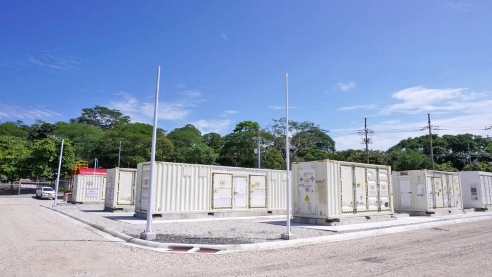
The Argentine province of Cordoba has issued a tender to connect new BESS infrastructure. It intends to grant three projects: Isla Verde, Villa Maria, and Bialet Masse BESS. The trend stems from the increasing use of intermittent renewables, grid instability and frequency management issues, and the rising cost of thermal peaking generation. BESS facilities are being installed in transmission-constrained areas, renewable generation clusters, and metropolitan load centers. This location optimizes congestion relief, renewable energy consumption, and local reliability improvements. The deployment has also accelerated the adoption of energy management technologies, real-time dispatch optimization, and improved inverter-based grid assistance. It also represents a shift toward adaptable, storage-supported energy systems, hybrid projects that combine generation and storage, and data-driven grid operation. These interconnections depend on robust power line hardware for secure and flexible connections. The BESS project development uses guy clamps to ensure mechanical stability and structural safety.
High-quality guy clamps hold the guy wires that support the tall towers needed to connect battery storage systems to the power grid. The clamp forms a secure loop in a guy wire and anchors the load-bearing end to avoid slippage in the wind. It also provides a strong mechanical hold, allowing guyed systems to withstand dynamic loads without loosening and keeping crucial equipment aligned. Guy clamps distribute stress along the wire and secure individual wire strands without causing damage. This promotes even load transmission and consistent performance. The clamps are also required for fastening the transmission towers and poles that connect BESS projects to high-voltage networks. They ensure that the bond remains robust even when subjected to environmental challenges. Guy clamps made of hot-dip galvanized steel or stainless steel prevent rust and degradation to ensure durability in Argentina’s environmental conditions.
Quality assurance of guy clamps used in BESS facilities
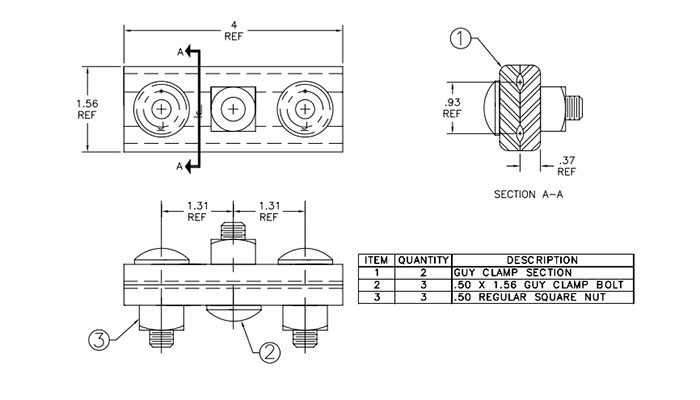
Quality assurance for guy clamps assures mechanical dependability, corrosion resistance, and long-term load stability. Guy clamps help to stabilize poles, masts, and support structures in electrically active settings. Quality assurance helps to prevent failures that cause conductor misalignment, clearance violations, and equipment damage in storage-integrated substations and feeder networks. Material verification ensures good tensile strength, ductility, and fatigue resistance under cyclic stress. The procedure also involves mechanical performance testing, dimensional correctness and fit checks, and manufacturing process control. Quality assurance during guy clamp installation includes a pre-installation examination to confirm the correct size in relation to the diameter of the guy wire. Quality assurance must ensure enhanced corrosion protection for long service life and compatibility with high-density substation layouts. It also ensures reliability under combined mechanical and environmental stressors.
Functions of guy clamps in the development of BESS facilities in Argentina
Guy clamps provide structural load management and stability, which are critical for ensuring electrical clearances, equipment alignment, and yard integrity. The clamps serve in mechanical support systems for three-phase electrical infrastructure. The clamps serve several important functions in the facilities.
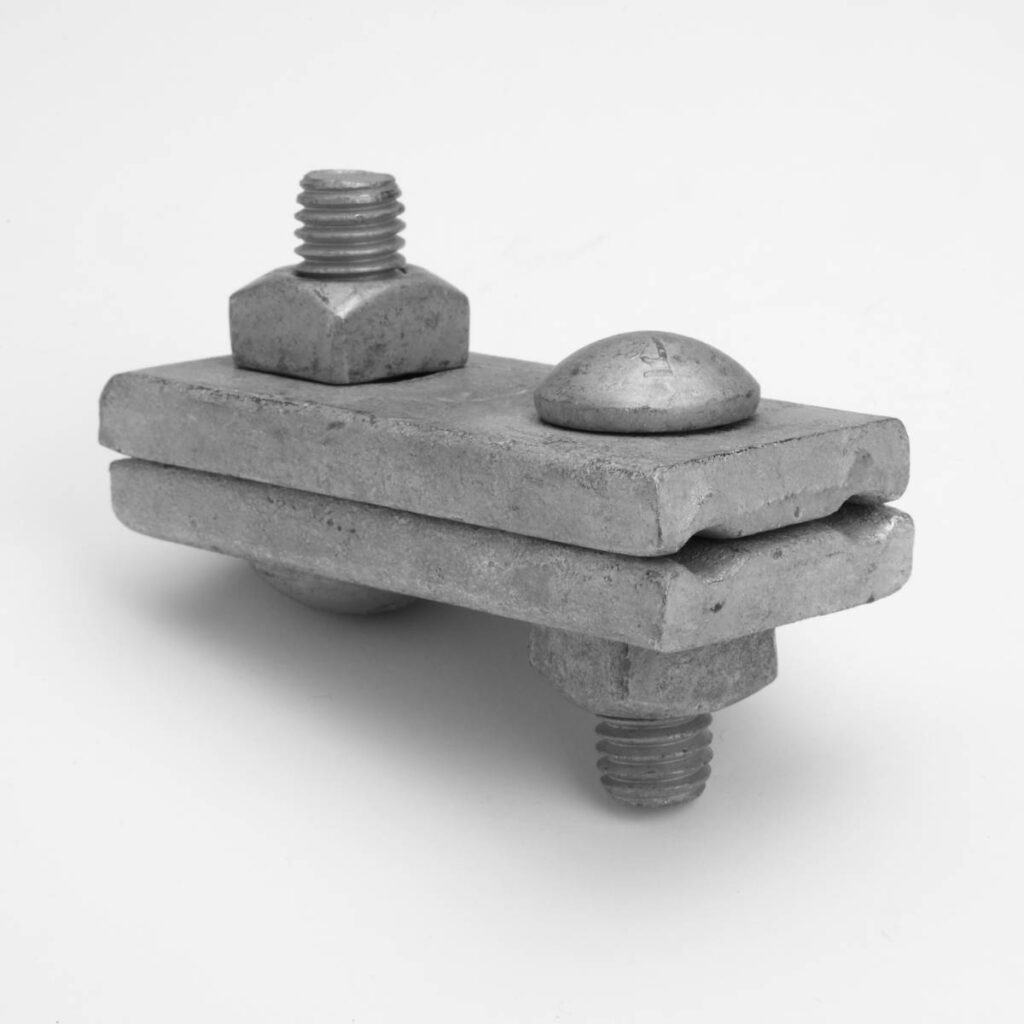
- Anchoring and stabilization of support structures – guy clamps secure guy wires to anchors and enable them to stabilize poles, support mast structures, and counteract lateral forces. This ensures the conductor supports remain upright under wind, tension, and operational loads.
- Maintaining electrical clearances – guy clamps hold guy wires at fixed tension, preserve conductor geometry, and reduce the risk of clearance violations.
- Load transfer and mechanical stress distribution—the clamps distribute tensile forces, prevent slippage, and maintain structural equilibrium of poles and frames.
- Supporting overhead feeder integration—guy clamps stabilize poles carrying feeders, support transitions between overhead lines and substation equipment. They also maintain alignment of conductors feeding transformers and switchgear.
Challenges in developing BESS facilities in Argentina
BESS deployment in Argentina suffers with macroeconomic, regulatory, grid, and technical constraints. Argentina should overcome these constraints by restoring macroeconomic stability, establishing clear, bankable market procedures, and improving grid infrastructure and integration capabilities. Common challenges to address are:
- Grid and infrastructure limitations—these include transmission constraints and interconnection delays.
- Financing constraints – BESS projects are capital-intensive and financed in USD. Additionally, revenues are often peso-denominated, which creates currency mismatch risk.
- Technology and supply chain challenges – Argentina depends on imported battery systems and power electronics, which causes dependency. There are also import restrictions, tariffs, and administrative delays increasing project timelines.
- Technical integration challenges – these include grid compatibility, which demands upgrades in protection systems, control architecture, and voltage and frequency management systems.