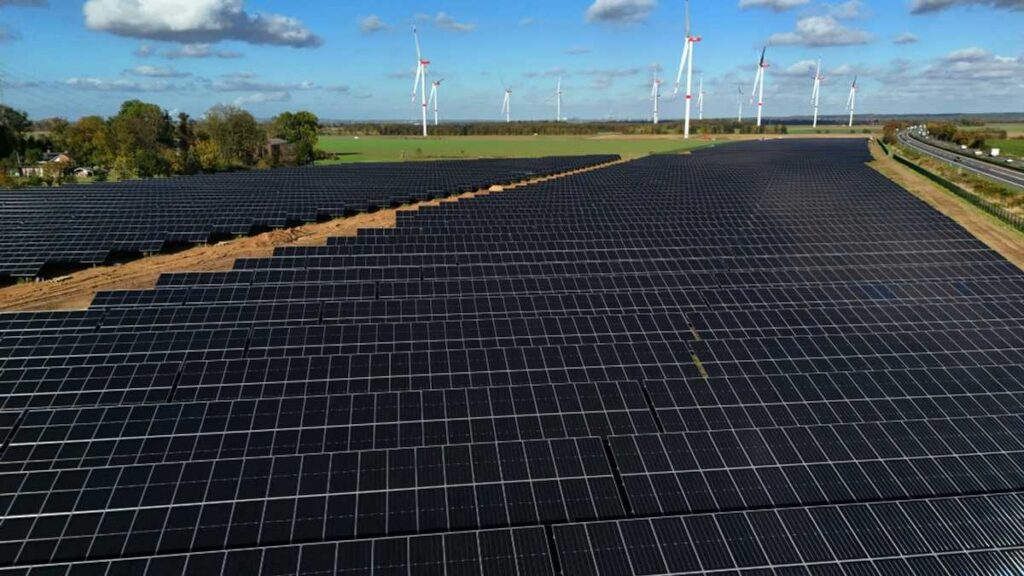
Chile’s Environmental Assessment Service (SEA) has accepted the environmental impact statement for the Sidon Solar photovoltaic project. This project will have 158.17 MWdc of solar production and 1,296 MWh of battery storage capacity. The project will also include 218,160 725 W solar modules mounted on 4,040 single-axis trackers. The panels will also receive support from 18 transformer stations. Sidon Solar will also install 324 Huawei Luna2000 battery packs on a 30,967-square-meter site. The electricity generated by this project will be evacuated to the Entre Rios substations via a 220 kV transmission line. The 5.7 km line will have a single circuit and a normal capacity of 170 MVA. The interconnection between panels, trackers, BESS, and the transmission lines will depend on reliable electrical connections, insulation, grounding, protection equipment, and mechanical components. These components include copper compression terminals, clamps, grounding hardware, cable accessories, and structural fittings.
Copper compression terminal lugs form a permanent, gas-tight, and low-resistance electrical link by cold-welding the conductor strands to the lug barrel. The compression lugs reduce resistance at the connection site, preventing heat accumulation and power loss. UV exposure, heat cycling, and moisture all pose challenges for solar infrastructure. Tin-plated copper lugs aid to prevent oxidation and corrosion in outdoor situations. Copper compression terminal lugs ensure a gas-tight seal, preventing vibration-induced failure. Copper compression lugs in BESS systems ensure stable inter-cell and inter-component connections. They terminate finely stranded flexible cable without breaking the strands. They ensure the connections withstand fault currents, extreme weather, and decades of service without maintenance. Compression lugs provide the mechanical and electrical integrity and prevent rotation and loosening from vibration.
Quality assurance for copper compression terminals used in solar and storage infrastructure
Copper compression terminals provide a low-resistance electrical and mechanical interface for wires and equipment. They are crucial in utility-scale solar farms, BESS, and transmission systems that need dependable connections to function under demanding electrical conditions. Copper compression terminals need consistent production quality to cut connection failures across the facility. Conducting QA ensures that terminals retain dependable connections between PV cables, combiner equipment, inverters, transformers, grounding systems, and other electrical components.
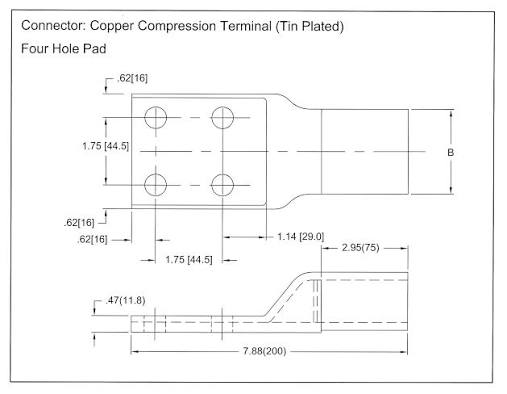
Reliable terminals serve to limit the likelihood of overheating and connection degradation in battery racks, DC collecting systems, busbars, power conversion systems, and switchgear. Effective quality assurance reduces the probability of high-resistance connections, overheating, conductor pull-out, corrosion, premature failure, and unplanned outages. The QA process covers material quality verification, dimensional and manufacturing inspection, compression performance testing, electrical resistance testing, and corrosion resistance. QA helps ensure that the terminal does not crack, deform excessively, or release the conductor during service.
The significance of copper compression terminals in solar PV and transmission networks in Chile
Copper compression terminals provide safe electrical connections between conductors and equipment while also facilitating efficient current transfer. The terminals ensure the electrical and mechanical integrity of Chile’s solar PV, BESS, and transmission networks. The compression terminals connect generation equipment, ease power conversion, and provide dependable conductor-to-equipment interfaces. Here are their primary responsibilities in infrastructure.
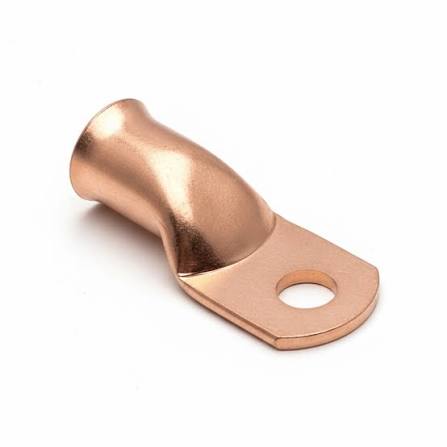
- In solar PV systems, solar projects rely on connections across PV arrays, collection systems, inverters, transformers, and substations. Copper compression terminals establish reliable connections between conductors and electrical equipment. They connect PV conductors to equipment, maintain low-resistance connections, support high-current circuits, and improve mechanical security.
- In BESS infrastructure, BESS needs electrical connections for battery racks and power conversion equipment operating at high currents. Compression terminals provide secure interfaces throughout the system. They help connect battery racks and DC busbars, battery management, power conversion systems, DC collection systems, and inverters.
- In transmission networks, compression terminals support electrical connections within transmission and substation infrastructure. They provide conductor-to-equipment interfaces at locations such as transformers, busbars, switchgear, disconnectors, and grounding systems.
Technological aspects of the Sidon solar project in Chile
The Sidon solar PV project is a utility-scale renewable energy development that combines large-scale solar generation with battery storage. The project includes single-axis tracking technology, high-capacity PV modules, transformer infrastructure, and a 1,296 MWh BESS. The project will also feature transformer stations to regulate voltage levels between solar production systems and the larger electrical network. Sidon solar project will also incorporate digital monitoring systems that can report on PV output, battery charge, voltage and current, equipment temperature, transformer performance, inverter function, and system alerts. It will also interact with the grid, necessitating coordination among the PV arrays, inverters, transformers, protection systems, storage systems, and transmission infrastructure.