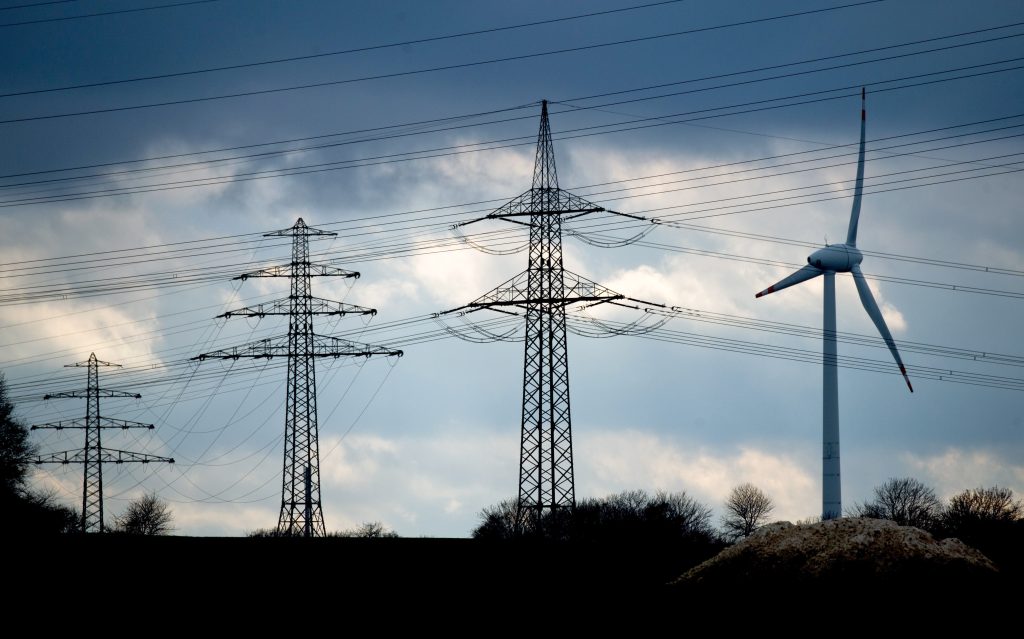
The National Electricity Company (ENDE Corporacion) operated four wind power stations in Bolivia, generating 56.6 GWh. The greatest winds were recorded in September at the four wind farms, allowing the country to generate wind energy from these resources. Wind energy generation increases with successive generations. For example, Qollpana produced 17% more energy in September 2023 than in September 2022. The Warnes, San Julian, and El Dorado wind farms produced 45% more energy in 2023 than in 2022. Side ties play an important and diverse role in the overhead transmission lines that transport electricity from wind farms to Bolivia’s main grid.
Side tie for insulators provides a secure and dependable electrical and mechanical connection between conductors. Bolivian wind farms are located in the Andean mountains and wide plains, which have strong winds. Clashing leads to electrical problems, physical damage, and grid instability. The side tie for insulators keeps the subconductors at a set distance. They prevent the conductors from ever coming near enough to collide. Side ties provide mechanical stability, electrical safety, and long-term performance for overhead transmission and distribution lines.
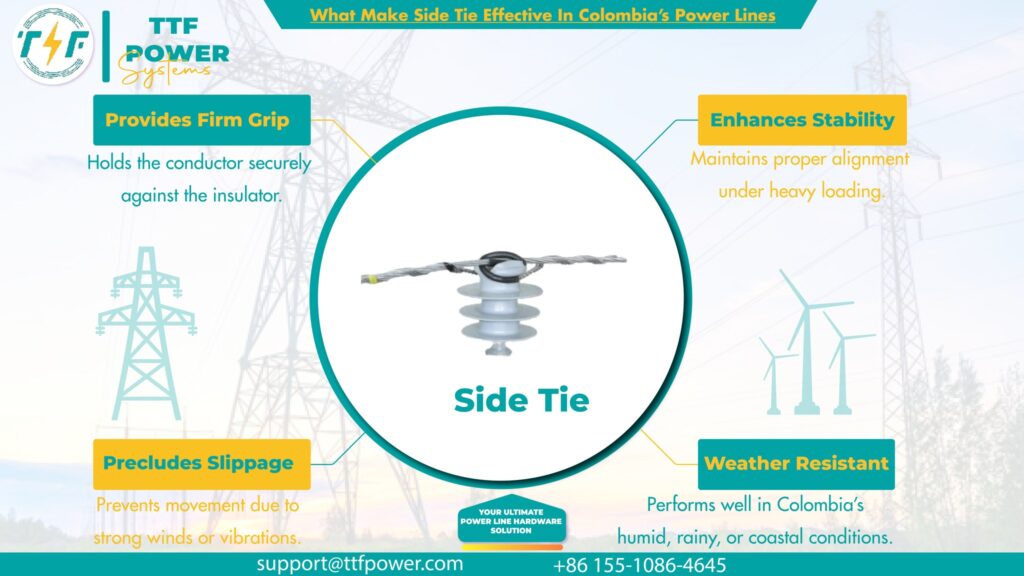
High-quality ties connect conductors to insulators on poles in overhead electrical networks. The ties help to ensure that power is safely and efficiently transmitted from turbines to substations and the national grid. A side tie offers a tight grip, securing the conductor to the insulator. This prevents displacement induced by rapid wind gusts, turbine mechanical vibrations, and temperature-related line tension variations. They stabilize the line under strong wind loads to ensure that the conductors remain properly spaced and aligned. This prevents contact between conductors, which could result in short circuits.
Side-tie technology in wind energy networks
Side ties combine technology that improves the safety, reliability, and efficiency of Bolivia’s wind power infrastructure. Side ties’ design and manufacturing technology have evolved to resist Bolivia’s hard climate, high altitudes, and windy circumstances. The following are the functions of the side tie in Bolivia’s wind energy infrastructure.
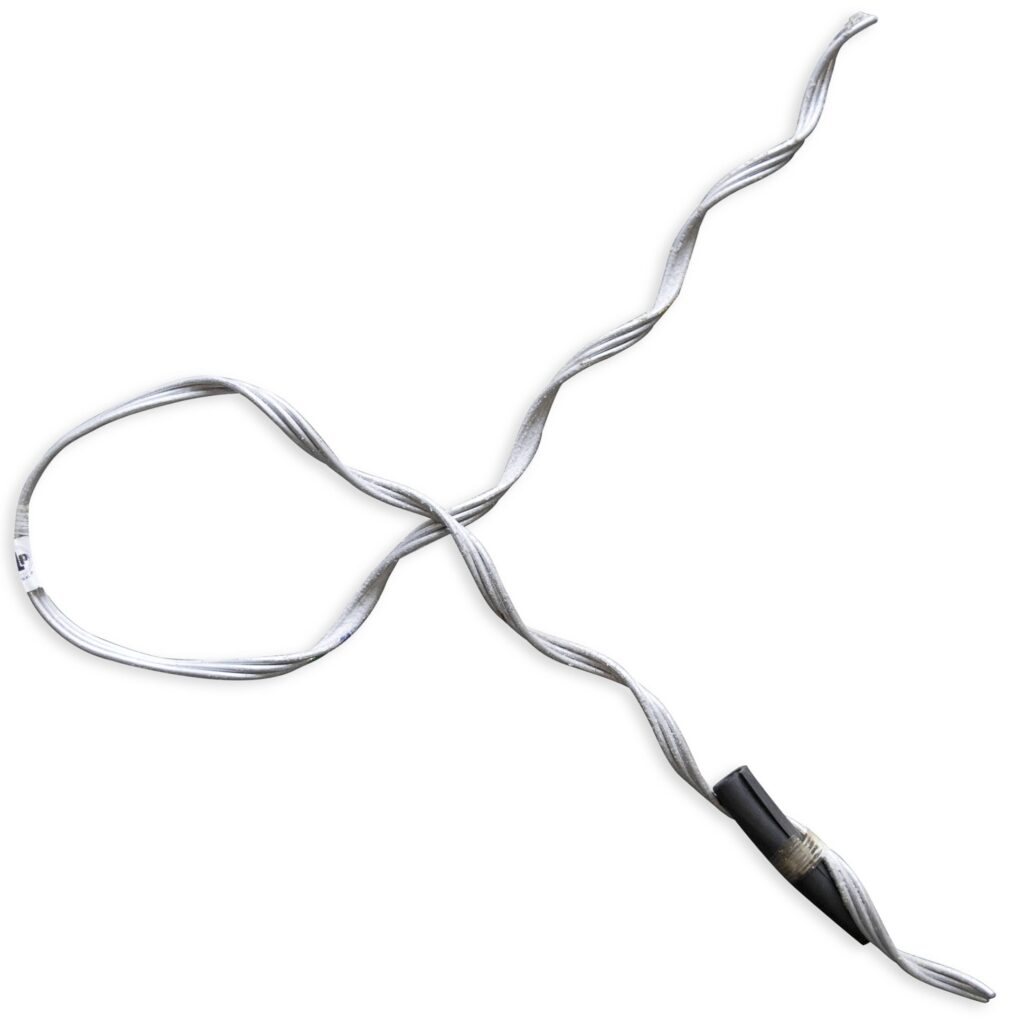
- Performed side tie technology—the side ties are from pre-shaped aluminum-clad or galvanized steel wire. These ties are spiral-wrapped around the conductor and the insulator neck. The preformed shape ensures uniform grip pressure along the contact areas to reduce mechanical stress points.
- Polymer-coated and insulated ties—Bolivia uses modern side ties that feature polymer coatings to protect against electrical damage. Technologies include side ties coated with high-dielectric-strength polymers, resistant to UV radiation, corrosion, and temperature extremes. They electrically insulating to prevent leakage currents.
- High-tensile alloy side ties—these side ties are functional in larger transmission lines carrying electricity from Bolivia’s wind farms to urban centers. These side ties withstand mechanical strain, maintain alignment and sag control, and resist corrosion from moisture.
- Composite and smart side-tie designs—emerging composite side-tie technologies and smart monitoring solutions are revolutionizing Bolivia’s renewable sector.
The role of side ties in Bolivia’s wind power infrastructure
Side ties in wind farms maintain mechanical stability and electrical efficiency throughout Bolivia’s transmission lines. Side ties attach conductors to insulators in overhead power lines. They secure the conductor against the side of the insulator neck. They stop movement induced by wind pressure, vibration, or temperature changes. Here are their roles in Bolivia’s wind energy infrastructure.
- Ensuring a secure conductor attachment—a side tie provides a firm mechanical grip, keeping conductors stable under intense wind load. This prevents line displacement with other structures to reduce the risk of short circuits.
- Reducing wind-induced vibration and fatigue—side ties help absorb and dampen vibrations to reduce mechanical stress on conductors, insulators, and supporting structures.
- Protecting conductors and insulators from mechanical damage—side ties create a buffer between the conductor and the insulator by distributing pressure and minimizing friction.
- Maintaining electrical stability and alignment—the ties ensure that conductors remain properly positioned along the insulator line.
Limitations to wind power adoption in Bolivia’s energy sector
Bolivia has made great advances in renewable energy, particularly wind production. Despite this feat, wind power accounts for a modest part of Bolivia’s entire electricity mix. It poses economic, technological, environmental, and infrastructure concerns. These factors impede large-scale wind power deployment in Bolivia. Inconsistent wind resources, high initial investment, inadequate transmission infrastructure, intermittency, and storage are all significant problems. Bolivia must solve these difficulties by strengthening grid linkages, improving wind mapping, creating investment incentives, and increasing local capacity.