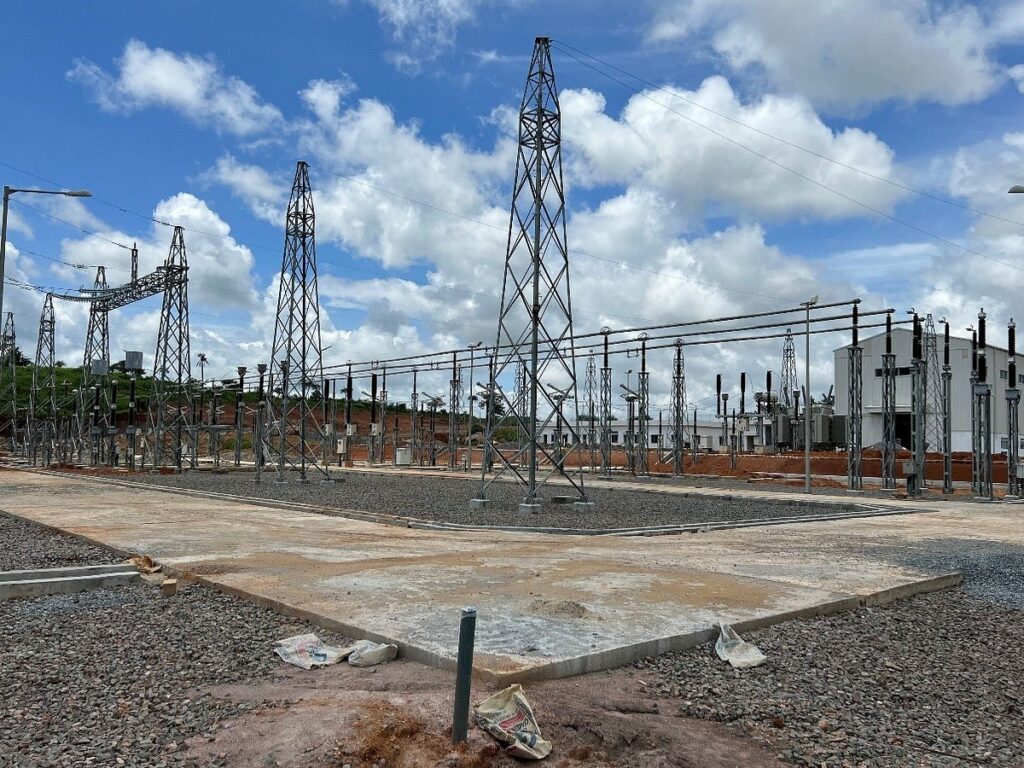
Acciona, a Spanish infrastructure company, has recently obtained a contract to design, fund, and manage a 330 km power transmission line in Southern Peru. The $284M project encompasses the system’s operation and maintenance. The 220 kV power line will improve electricity distribution in the area. It encompasses the construction of two new substations and the expansion of three others in Quencoro Nueva and Onocora. The newly built and upgraded substations are intended to ease future connectivity to renewable energy generation facilities. Acciona announced that the updated infrastructure will reduce existing grid congestion and cut overload problems throughout the southeast of Peru’s national interconnected electrical system. A service grip dead end ensures structural integrity, safety, and efficiency in both construction and maintenance.
During the construction, the service grid dead end secures the end of a transmission conductor to a pole, tower, or insulator string. It prevents slippage under mechanical tension from wind, ice, or thermal expansion. The grip dead end is designed to handle high tensile loads without damaging the conductor. It also allows quick conductor replacement without re-splicing. A service grid dead end reduces conductor fatigue caused by wind-induced vibrations. In the 220 kV transmission lines, the service grip dead end serves in dead-end towers, sectionalizing points, river crossings, and maintenance splices. Common types used include preformed dead end grip, helical dead end grip, and parallel wire grip. This makes them vital in the construction of the 220 kV transmission lines in Peru. Service grip dead ends are among some of the technologies showcased at the upcoming Industrial Expo, Peru, in August.
Service grip dead end in Peru’s grid projects
Dead-end anchors ensure structural integrity, safety, and efficiency in the construction and maintenance of transmission lines. Service grip dead ends ensure mechanical reliability, easier maintenance, and long-term durability against corrosion and fatigue. A service grip dead end is a mechanical fitting used to end, anchor, and secure overhead conductors to transmission structures. It wraps around the conductor to grip it without causing damage. The dead-end grips are crucial for initial construction and ongoing maintenance of the 20 kV transmission lines in Peru. Here are the roles of the service grip dead end in transmission line construction in Peru.
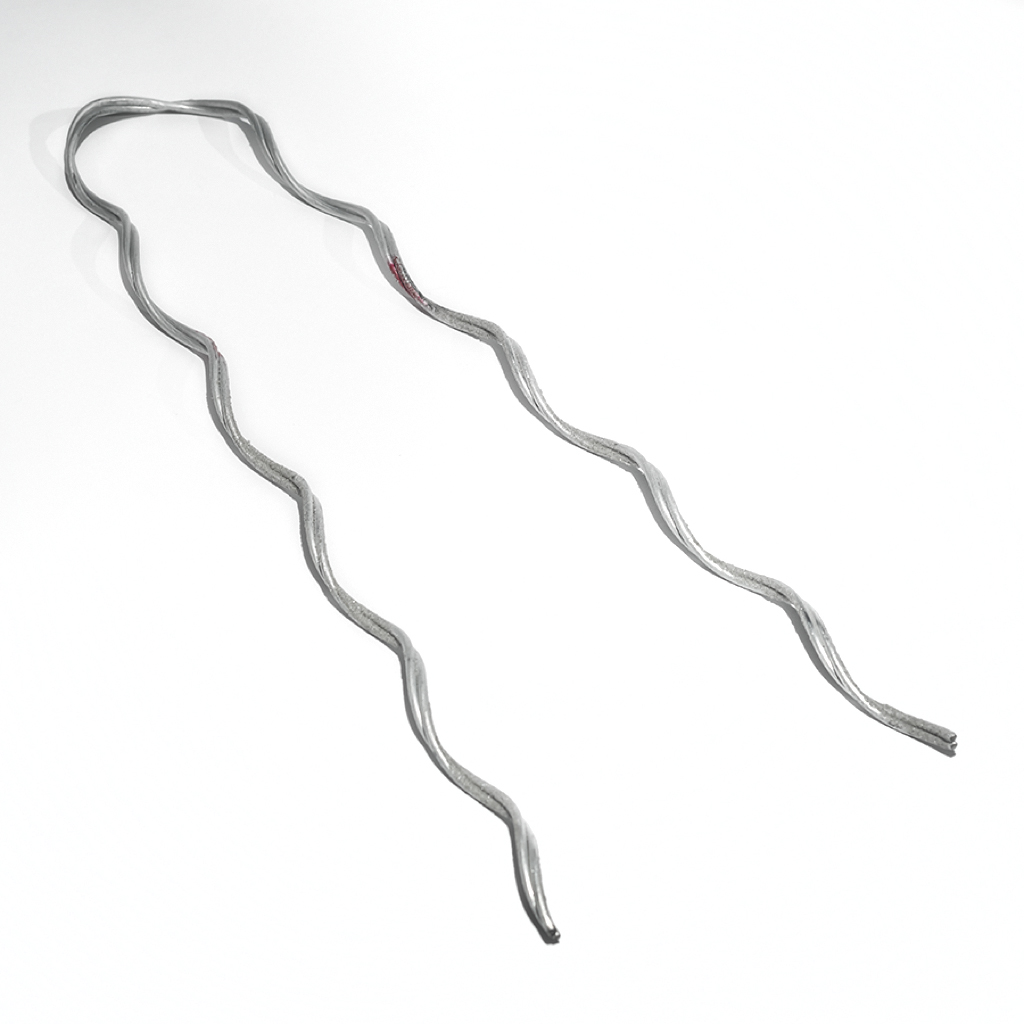
- Anchoring conductors at dead-end structures—dead-end anchors end the conductor by transferring mechanical load to the structure. It holds heavy ACSR and AAAC conductors in place under high tension.
- Tool-free and fast installation—service grip dead ends can be installed without heavy crimping equipment. It wraps around the conductor by hand. This helps speed up stringing operations and reduces project costs.
- Preventing conductor damage—the helical grip distributes stress evenly along the conductor’s length. It avoids the crushing or sharp bending that occurs with other anchoring methods. This is crucial for high-voltage conductors, where maintaining strand integrity is crucial.
- Handling challenging terrain—service grip dead ends provide secure terminations in high-tension spans without the need for complex temporary anchoring.
- Maintaining proper tension—service grip dead ends maintain a strong, consistent grip under long-term tension. It helps prevent gradual conductor slippage. Regular inspections ensure the rods remain intact and free of corrosion.
Regional impacts of transmission line infrastructure development in Peru
The establishment and expansion of transmission lines in Peru are vital for the economy, dependability, renewable energy, and local communities. The development of transmission lines influences the nation’s energy industry and progress. This advancement will enhance energy accessibility and promote renewable sources. Its future prosperity relies on community involvement, sustainable methods, and ongoing investment in smart grid technology. These effects encompass:
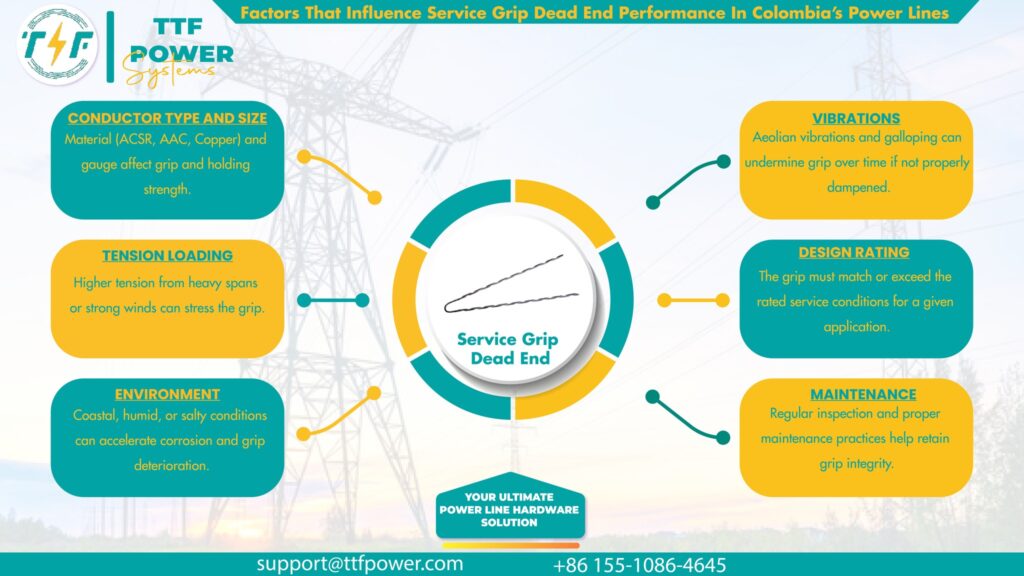
- Dependability and capacity—new 220-138 kV corridors and enhancements to substations ease bottlenecks in the southeast and southern macro-region.
- More affordable, cleaner energy combination—transmission enables grid entry for extra wind, solar, and small hydro. This is essential for reducing marginal costs and emissions.
- Regional economic growth outside the poles and wires—consistent supply bolsters hospitality and public services. This decreases reliance on generators in the area.
- Access and quality for nearby communities—expanding feeder lines from new substations enhances last-mile reliability and facilitates the addition of medium and low voltage laterals, public lighting, and community services.