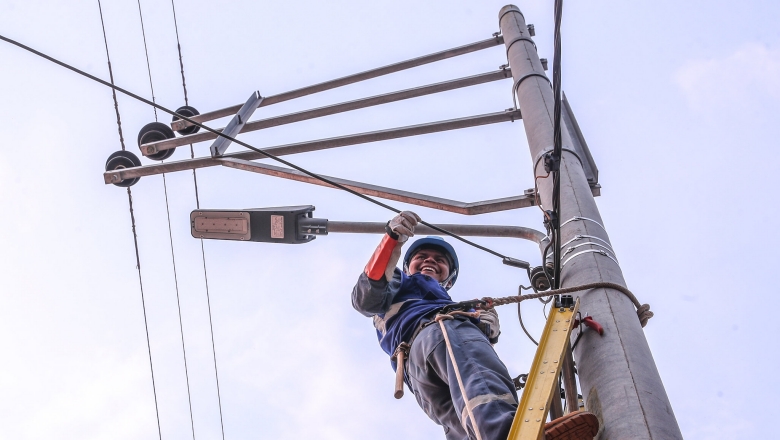
Peru is implementing rural electrification initiatives to increase power access and enhance local economies. The government, commercial sector, and foreign partners are collaborating on a variety of initiatives that integrate technology, financing, and community participation. The electrification schemes are managed by the Ministry of Energy and Mines’ General Directorate of Rural Electrification (DGER). 39 projects in 19 regions are in underway, with a total investment of $415 million. These projects include grid extension in locations where it is technically and economically possible. Solar household systems, mini-grids, and hybrid renewable systems are being developed to reduce reliance on diesel generators. Various institutions, including the World Bank, IDB, and IFC, are sponsoring rural electrification schemes in Peru. Public-private partnerships are attracting private developers to invest in mini-grid and distributed solar projects. Cable suspension clamps play a crucial role in the mechanical support and integrity of the electrical distribution system.
Quality suspension clamps offer structural and protective benefits over electrical ones. The clamp grips and supports the overhead electrical conductor, keeping it in place on the poles. It also distributes the weight of the cable to the support structure and foundation. A well-designed clamp distributes pressure uniformly to avoid crushing, abrasion, or fatigue, which could cause the cable to break over time. Cable suspension clamps are from corrosion-resistant materials to endure the weather. The materials used include galvanized steel and aluminum alloy. These materials assist the clamps withstand severe winds, UV rays, and temperature variations. Rural electrification entails running distribution wires for great distances between poles. Suspension clamps control stress and vibration over extended distances. Proper cable suspension clamps work in conjunction with dampers to absorb vibrational energy and protect the cable from fatigue.
Uses of cable suspension clamps in rural electrification
Cable suspension clamps are essential for projects such as solar mini-grids, wind farms, and grid expansion in Peru. They ensure the safety, reliability, and long-term viability of power infrastructure. Cable suspension clamps are mechanical fittings that support and secure cables to poles. They keep the cables in place while allowing for modest movement, reducing mechanical stress. The following are the roles of cable suspension clamps in rural electrification initiatives.
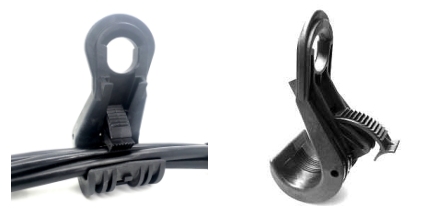
- Mechanical support for conductors—suspension clamps support overhead cables that distribute electricity from solar or wind generation sites to consumers.
- Reducing mechanical stress and cable fatigue—cable suspension clamps distribute forces evenly to reduce wear and prevent conductor breakage.
- Ensuring safety and reliability—proper installation of suspension clamps keeps lines at the correct clearance. They prevent accidental contact with people or infrastructure and ensure a stable and safe electricity supply.
- Facilitating grid expansion in difficult terrain—suspension clamps enable cables to span the distances by securing them to poles.
- Compatibility with renewable energy systems—cable suspension clamps help stabilize medium-voltage lines exposed to strong gusts. They support low- and medium-voltage distribution lines connecting arrays to substations or rural microgrids.
- Long-term infrastructure sustainability—suspension clamps reduce maintenance costs and prolong the lifespan of rural electrification networks.
Challenges During Rural Electrification in Peru
Peru has made great progress in electrification, with over 95% countrywide coverage. However, rural communities in the Andes highlands and Amazon rainforest confront significant difficulties. Extending to these places necessitates overcoming geographic, economic, technological, and social barriers. Here are the main problems facing rural electrification in Peru.
- High infrastructure costs—extending transmission and distribution lines in sparsely populated areas is costly in urban areas. This leads to financial viability challenges for private companies.
- Technical limitations—these include grid instability in remote extensions, renewable integration challenges, and harsh weather.
- Geographic and terrain barriers—remote villages in steep, high-altitude areas make grid extension difficult and expensive. The Andes mountains and Amazon forests face conditions that raise project costs and extend implementation timelines.
- Limited funding and investment gaps—the funding in Peru is insufficient to meet 100% coverage goals. Subsidies are essential to make rural electrification affordable, and long-term sustainability depends on continuous public investments.
- Energy demand and economic viability—many rural households use limited electricity, which makes cost recovery difficult. Rural electrification risks may be underutilized without productive use of energy.
- Operation and maintenance issues—lack of trained local technicians leads to delays in repairing faults or maintaining renewable systems like solar panels and batteries.