
The Pata Mora initiative in Mendoza province, Argentina, signifies a systemic attempt to reshape the local economic framework. It is regarded as a hub for services and infrastructure, with the goal of coordinating and promoting productive growth without repeating the disconnected approaches of earlier times. The initiative is intended to serve as a driver of regional integration, economic variety, and continuous industrial output. This progress will influence infrastructure, logistics, and services to allow extensive industrial operations. The initiative entails enhancements and building of essential transportation routes that will ease the flow of inputs and outputs for industrial users. Enhanced transportation and utilities reduce operational difficulties for major producers, enabling companies to expand their operations. It also results in improved energy infrastructure that draws in investors with significant capital in mining and renewable energy integration. Employing the insulated piercing connectors facilitates the advancement of low- and medium-voltage distribution and grid enhancement
Insulation piercing clamps (IPC) allow installers to tap into existing overhead service lines without cutting the conductor. It helps create a secure, weatherproof, and electrically sound connection. The clamp is crucial for the bi-directional flow of electricity from the solar system to the grid. This leads to reduced installation time and cost for connecting small-scale renewable systems.
IPCs are also ideal for the rehabilitation and upgrading of Argentina’s urban and suburban distribution networks. Insulated piercing connectors enable seamless and insulated splices and taps without the need for service shutdown. The connectors provide a reliable way to repair damaged lines and improve grid resilience. Additionally, the connectors allow for branch connections from main lines to new service drops. They ensure a proper connection in field conditions and reduce the need for specialized welders.
Uses of the insulated piercing connectors in Argentina’s infrastructure development
Insulated piercing connectors create secure electrical connections without stripping the insulation from conductors. They ensure efficiency, safety, and scalability in distribution, renewable energy integration, and smart grid deployments. IPCs penetrate insulation and complete connections to reduce the need to strip conductors. The connectors are insulated and weather resistant to allow their use on overhead and underground distribution networks. Here are the functions of the insulated piercing connectors in infrastructure development.
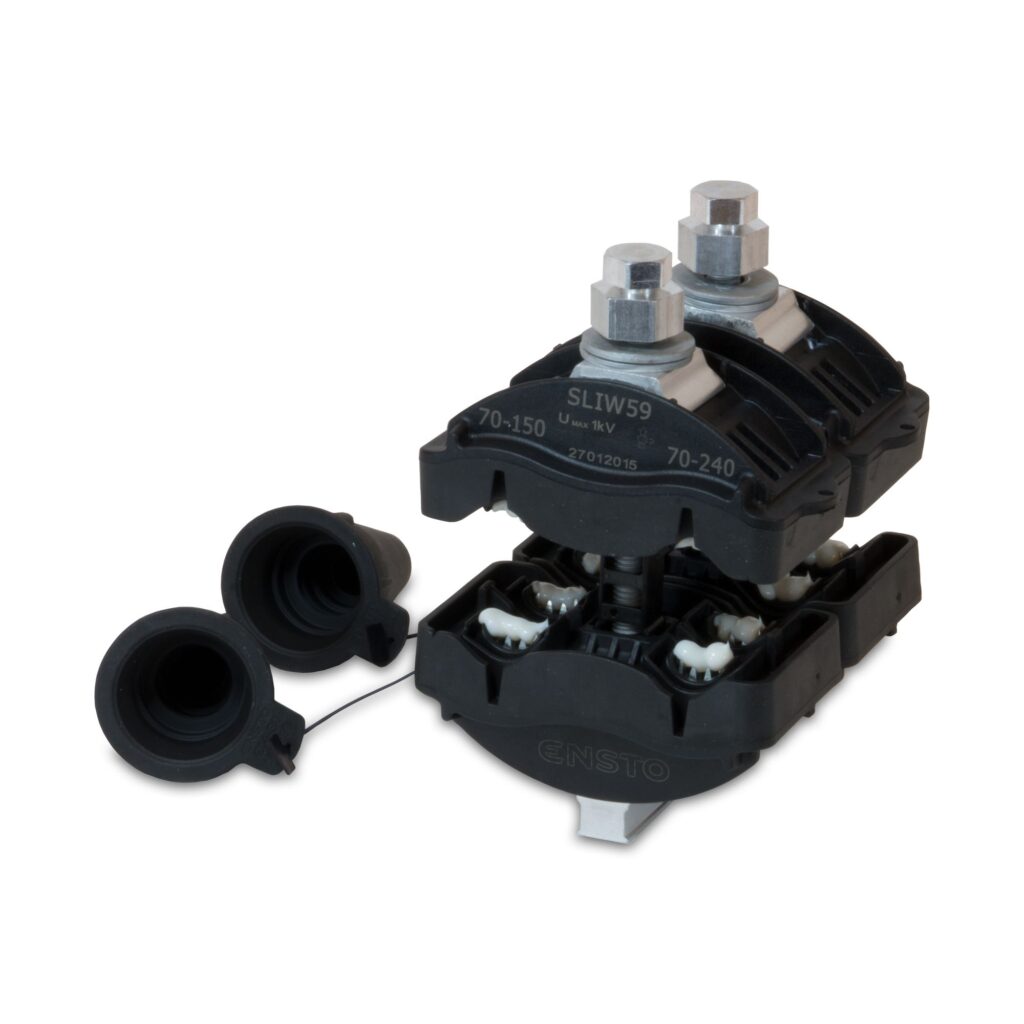
- Network expansion and tap connections—insulation piercing connectors allow grid developers and utilities to add service taps. They help the deployment of new infrastructure in rural electrification projects, urban grid densification, and expanding distribution networks.
- Supporting renewable energy installations—IPCs enable quick tapping into DC and AC conductors without removal. They support modular and future expansion of renewables. Additionally, the connectors maintain reliable electrical contact without compromising insulation integrity.
- Enhancing reliability and resistance—insulated piercing connectors are from corrosion-resistant materials. The insulated shells are UV-stable, moisture-resistant, and mechanically durable. The connectors ensure these connections remain stable, resist degradation, and maintain the integrity of the installations.
- Improving safety during installation—the insulated body of the IPC provides mechanical and electrical protection. They reduce the chance of electrical arcing, short circuits, and shock hazards during installation. They do so by maintaining the conductor’s insulation and preventing exposure of bare metal.
Essential infrastructure elements bolstering Argentina’s energy sector
The advancement of Argentina’s energy sector depends on a series of fundamental infrastructure elements. These ease the generation, transmission, distribution, and extensive industrial application of energy. This progress is essential as Argentina moves forward with its objectives in hydrocarbons, renewables, and grid modernization. These elements create the physical and operational framework that upholds reliability, scalability, and competitiveness in the energy system. These elements encompass:
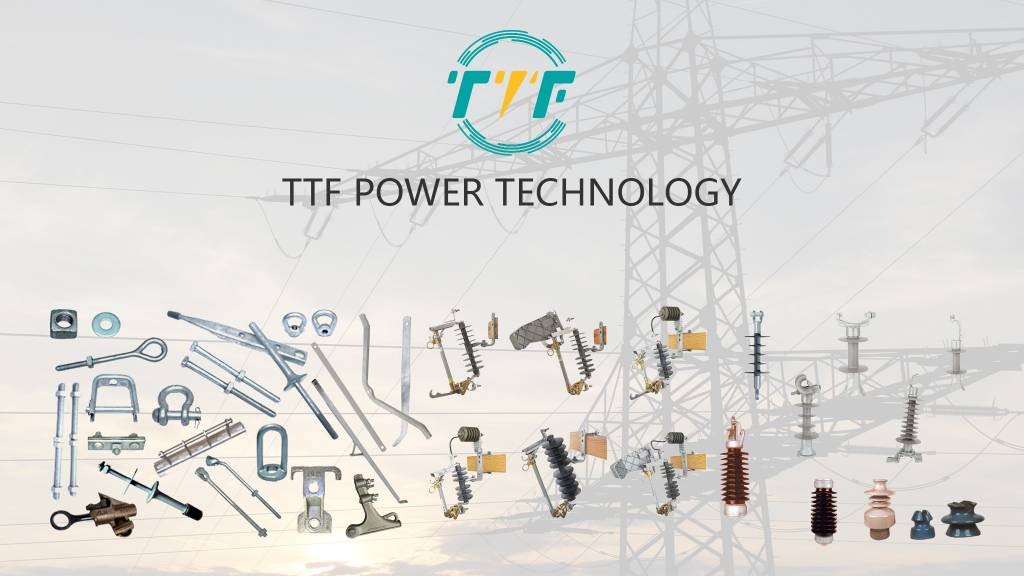
- Infrastructure for power generation encompasses thermal power plants, hydropower stations, solar and wind farms, and innovative energy technologies. These resources support Argentina’s shift towards a more robust and varied energy portfolio.
- Transmission network and high-voltage facilities—this enables electricity to be transferred from resource-abundant areas to where it is needed. It comprises extra-high-voltage cables, substations, switchyards, insulators, conductors, towers, and hardware elements like insulated piercing connectors.
- Distribution networks—distribution infrastructure guarantee energy delivery to industrial, commercial, and residential consumers. The infrastructure comprises medium- and low-voltage cables, transformers, protective devices, and industrial distribution systems.
- The infrastructure for transporting oil and gas comprises pipelines for crude oil, natural gas, and refined goods. It also comprises compressor stations, pumping stations, and storage facilities. The advancements depend on mechanical elements that guarantee structural integrity and prevent leaks