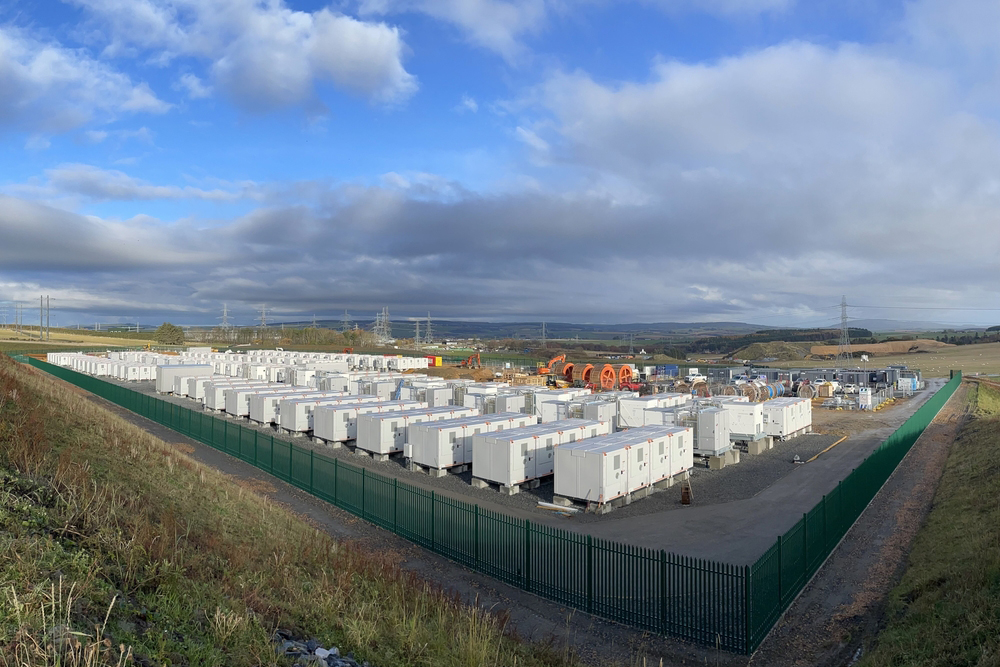
Argentina has plenty of resources to support its growing renewable energy sector. Authorities awarded 713 MW to projects in Buenos Aires, providing a significant boost. The AlmaSADI auction is also ongoing, with offers for 700 MW sought for Buenos Aires and neighboring provinces. In addition, Genneia, Argentina’s largest sustainable energy generator by installed capacity, has requested permission to construct storage systems at two wind farms and a thermoelectric complex. One project entails constructing a 100MW/400MWh energy storage system and related power line at the 38MW Vientos de Necochea wind farm in Buenos Aires region. The other wind project includes adding 100 MW/400 MWh of storage capacity and a power line to the existing 52 MW Villalonga Park. Genneia has a 60MW/300MWh energy storage earmarked for Bragado. Aluminum cable spacers ensure the safety, reliability, and longevity of BESS.
High-strength aluminum spacers constrain cables, keep them spaced apart, and avoid dangerous movement under fault situations. The spacers create a particular air gap between the wires, allowing for passive convective cooling and preventing heat buildup. They separate the cables without crushing them, ensuring that they work within their thermal limits. Cable spacers create a secure, fixed path that absorbs mechanical strain and prevents cable fatigue. Aluminum cable spacers separate various types of cables and phases. BESS systems use high voltages to enhance efficiency, and spacers lock in the exact separation distance required by electrical standards to prevent current from jumping across the gap. Aluminum cable spacers ensure that the BESS plant can survive electrical outages, handle heat efficiently, and work reliably alongside solar or wind farms.
Quality verification of aluminum cable spacers used in BESS infrastructure in Argentina
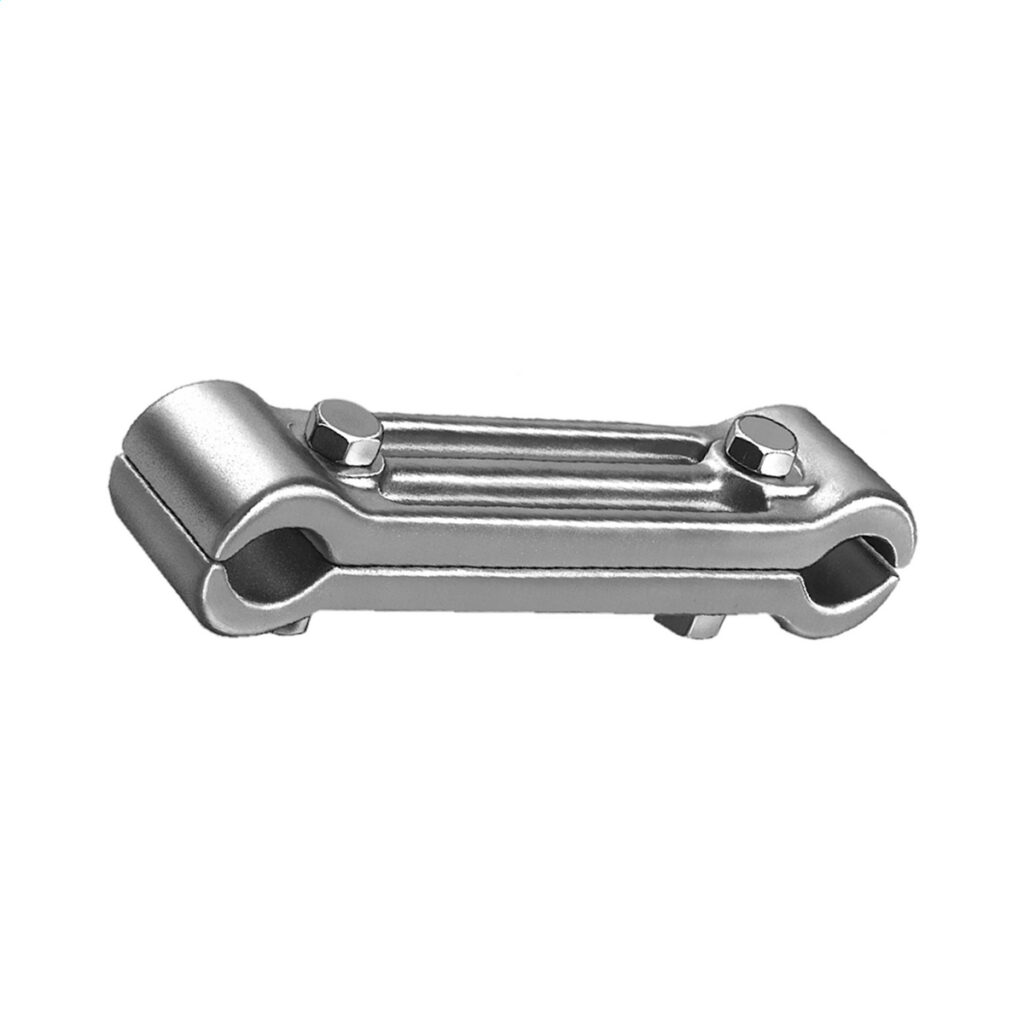
Quality assurance for aluminum cable spacers is critical as Argentina grows its utility-scale storage, renewable hybrid projects, and transmission reinforcement programs. The spacers contribute to electrical stability, conductor alignment, vibration reduction, and mechanical reliability. Aluminum cable spacers aid in maintaining conductor geometry and electrical clearances during dynamic operation. Quality assurance guarantees that spacers can bear mechanical loading, maintain bundle spacing, resist corrosion, and protect conductors. Poor-quality spacers can cause conductor clashing, vibration fatigue, corona discharge, overheating, and forced outages. The method consists of raw material verification, mechanical strength testing, dimensional accuracy and fit verification, clamp pressure testing, and fatigue resistance testing. During installation, quality assurance checks the right spacer positioning. proper conductor alignment, torque application, and spacing consistency. Incorrect installation may cause conductor abrasion, uneven load distribution, or premature hardware failure.
The functions of aluminum cable spacers in BESS infrastructure and integration in Argentina
Aluminum cable spacers are mechanical devices that are put between bundled conductors to ensure a consistent spacing, stabilize conductor orientation, and reduce mechanical movement. They help to ensure safe and steady power transfer between battery systems, substations, renewable production facilities, and transmission networks. Here are their respective roles in Argentina’s BESS infrastructure.
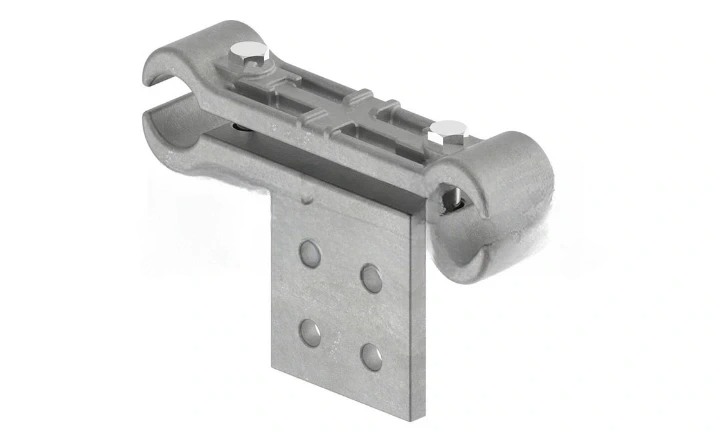
- Maintaining conductor spacing—aluminum cable spacers maintain uniform spacing between bundled conductors. They offer electrical clearance, electric field control, corona reduction, and operational stability.
- Reducing conductor vibration—cable cleats help reduce aeolian vibration, subspan oscillation, and conductor galloping. They protect overhead lines, interconnection hardware, and substation infrastructure.
- Supporting renewable energy and BESS integration—using the cable spacers to support the integration by maintaining bundled conductor geometry, stabilizing transmission lines, and protecting high-capacity interconnections.
- Enhancing grid reliability – the cable cleats help maintain conductor alignment, stable line impedance, and uninterrupted power flow. This improves the operational reliability of utility substations, renewable interconnections, and battery dispatch systems.
Opportunities for BESS systems in Argentina’s energy sector
Battery energy storage systems are opening up new prospects in Argentina’s energy industry as the country modernizes its power infrastructure, increases renewable energy generation, and addresses long-standing grid stability issues. BESS promotes renewable energy integration, urban grid stabilization, transmission congestion reduction, and renewable-plus-storage projects. Renewable growth, utility modernization, industrial energy demand, and transmission constraints are propelling the BESS industry into a rapid expansion. However, the industry may encounter structural issues that present chances for BESS. BESS can enable localized storage support, energy shifting, peak shaving, frequency management, renewable integration, and microgrid development. Opportunities may arise in utility-scale peak shaving systems, renewable hybridization, supplementary services, and industrial microgrids.