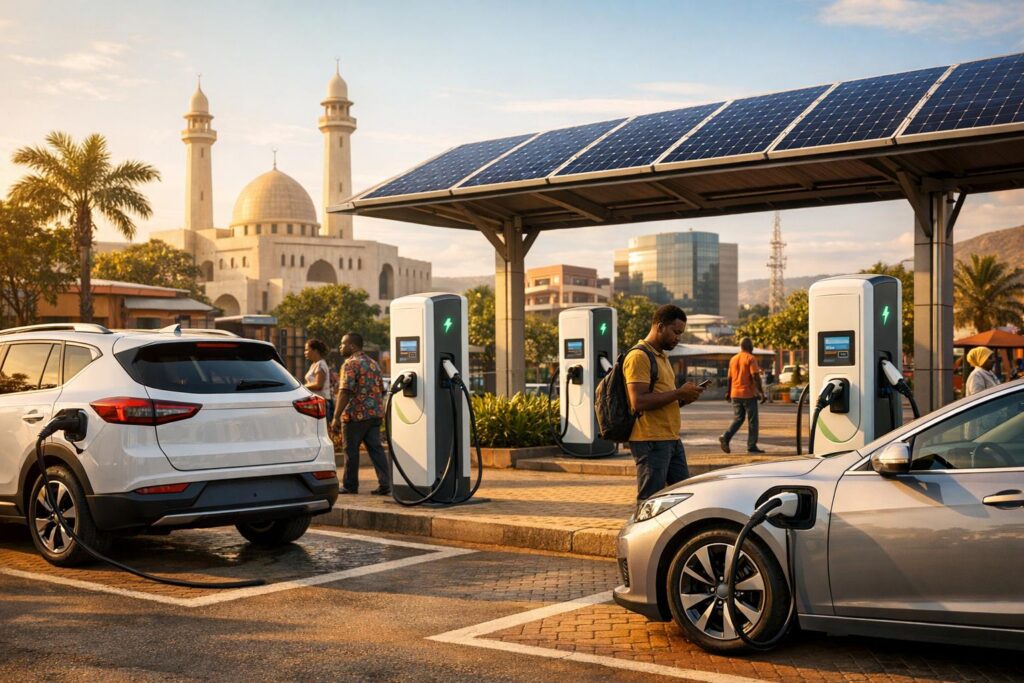
With the escalating price of gasoline, Chilean drivers are increasingly turning to electric vehicles. Switching to electric vehicles results in lower operational costs and more long-term savings. Electric vehicles have motors with fewer moving parts, which reduces wear and requires less maintenance. The absence of oil changes and routing engine servicing might result in significant annual savings. Chile has also expanded its electric vehicle charging infrastructure, making EV ownership more convenient. Infrastructure development reduces range anxiety and boosts consumer confidence in the shift from traditional vehicles to electric mobility. Electric vehicles can use charging stations that are powered by renewable energy. This integration minimizes greenhouse gas emissions from combustion engines, so contributing to Chile’s sustainable energy future. High-quality steel eyenuts are crucial in electric vehicle infrastructure for lifting heavy components like large battery packs in EVs.
Steel eyenuts connect to threaded holes in the battery pack tray, providing solid anchor points for lifting straps and a hoist. This allows professionals to remove the pack for servicing or replacement without causing damage to the sensitive unit. The eyenuts also hold cables and wires on utility poles that support power transmission and distribution lines. They connect to threaded bolts and anchor rods to secure guy strands, which stabilize poles and support overhead cables. Steel eyenuts are made of forged steel for greatest strength and corrosion resistance in outdoor situations. It is also built to industry standards and can withstand heavy weights.
Quality assurance for steel eyenuts used in Chilean electric car infrastructure
The growth of Chile’s electric vehicle charging network promotes transportation electrification. The stability of the infrastructure is critical for improving the charging infrastructure. Steel eyenuts are used to support mechanical assembly, cable management systems, grounding arrangements, mounting structures, and electrical equipment installations for EV charging stations and supporting power infrastructures.

Conducting quality assurance for Eyenuts helps to reduce failures that can cause equipment damage, structural instability, cable support failures, and service outages at charging stations. The procedure consists of material quality verification, dimensional inspection, mechanical testing, thread quality inspection, and corrosion resistance testing. It also covers coating quality verification, surface quality inspection, forging quality control, and traceability and documentation. These measures ensure the Eyenut can withstand operational conditions while providing safe, durable, and reliable performance in EV charging stations and renewable energy integration projects.
The functions of steel eyenuts in electric vehicle infrastructure
Chile is rapidly increasing its network of electric vehicle charging stations, BESS, and renewable energy projects. This development necessitates the employment of durable supporting gear, such as steel eyenuts. Steel eyenuts provide the safe installation, operation, and maintenance of EV-related electrical equipment. Here are the essential responsibilities they play in Chile’s EV infrastructure.

- Supporting EV charging station installation—Eyenuts provides secure attachment points for lifting and positioning heavy equipment. They secure charging cabinets, power distribution panels, transformers, and switchgear enclosures.
- Equipment lifting and maintenance – EV charging infrastructure needs periodic maintenance, upgrades, and component replacements. Eyenuts provide reliable lifting points that allow technicians to remove and reinstall heavy equipment.
- Supporting cable management systems—steel eye nuts maintain proper cable positioning and reduce mechanical stress on conductors. They integrate with cable support frameworks, suspension assemblies, and cable tray systems.
- Supporting renewable energy-powered charging stations—the charging stations include solar PV arrays, BESS, power conversion equipment, and distribution infrastructure. The Eyenuts help in equipment mounting, cable support, and maintenance access.
Impacts of EV adoption on Chile’s transportation industry
The expanding use of electric vehicles is altering Chile’s transportation economy, causing significant shifts in energy usage and infrastructural development. Government initiatives, renewable energy investments, and rising fuel costs all help to drive growth. The development is critical as Chile strives to achieve its decarbonization targets and reduce its reliance on imported fossil fuels. Here are the major implications on Chile’s transportation infrastructure.
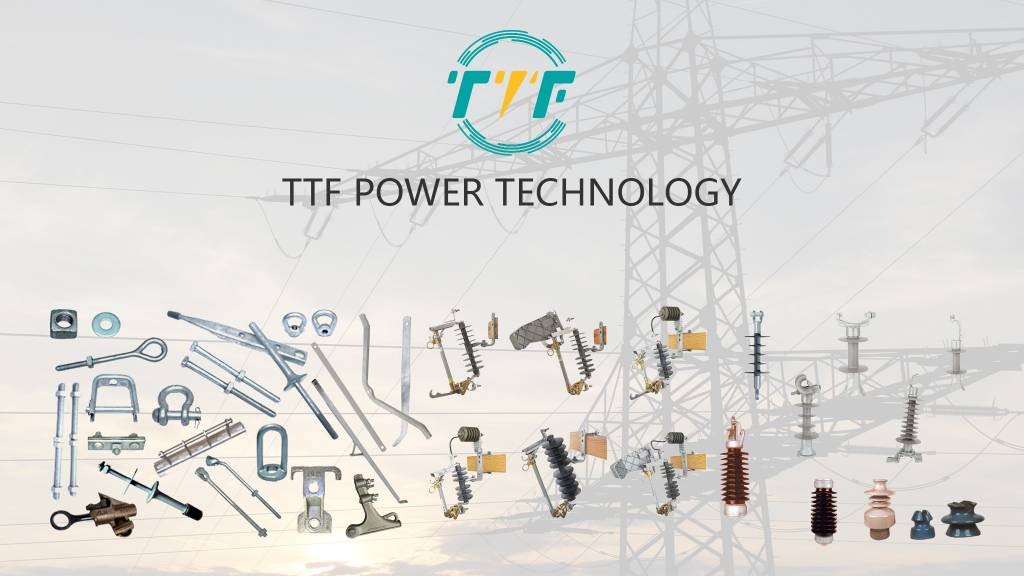
- Reducing dependence on fossil fuels – electric vehicles help lower fuel imports, reduce exposure to oil market volatility, improve national energy security, and diversify transportation energy sources.
- Supporting Chile’s clean energy transition—the growth of EVs creates synergy between transportation and renewable electricity generation.
- Expansion of charging infrastructure—the adoption leads to the development of public charging stations, commercial charging hubs, residential charging solutions, and workplace charging facilities.
- Lowering operating costs for vehicle owners—electric vehicles offer lower operating costs compared with conventional internal combustion engine vehicles. As petrol prices rise, EVs save costs on lower electricity prices compared with fuel.