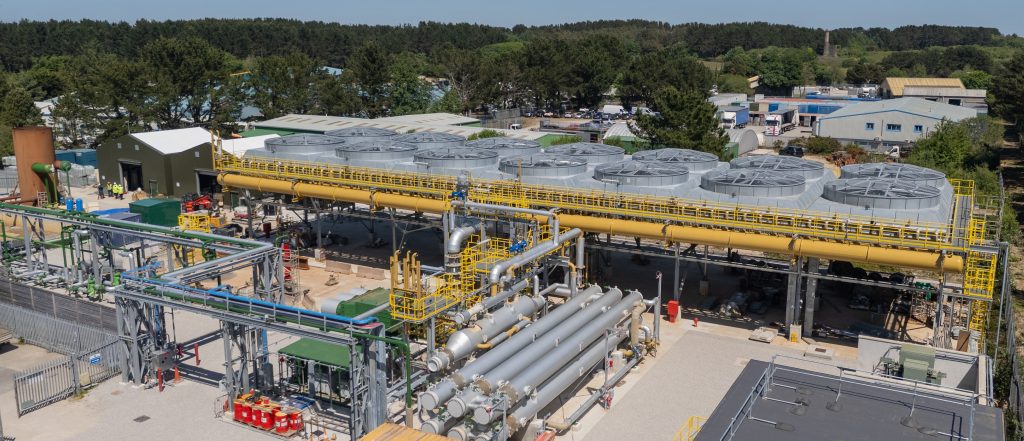
Chile has announced an ambitious national lithium strategy that seeks to treble yearly lithium output by 2034. Lithium production is critical as global demand for battery metals develops in tandem with the expansion of electric vehicles and energy storage. This entails drafting two new direct-award contracts for submission. Chile is also modifying and advancing significant contracts, such as new CEOL terms at Salar de Maricunga with Chile’s state miner and partners. The development represents a multifaceted effort to increase supply capacity and diversify project platforms. These contracts would support new production zones outside of traditional basins like Atacama. This helps to increase volume and diversify production by geography. Chile’s lithium demand contributes to increased supply, battery manufacture, pipelines, and helps to reduce supply imbalances. Lithium production relies on brine extraction equipment, evaporation ponds, pipeline networks, and chemical conversion plants. These networks depend on terminal bolts to ensure safety and efficiency.
High-quality bolts ensure the stability of large-scale lithium-ion batteries, which are used to store solar energy for lithium manufacturing. Terminal bolts connect conductors to battery module terminals, DC busbars, string combiners, inverter DC inputs, and grounding bars. They assure low-resistance connections, cut micro-gaps, and limit the likelihood of heat hotspots and arcing. The bolts provide mechanical stability, which improves the structural stability of battery racks, secures inter-module linkages, and reduces vibration. The bolts can survive temperature cycling, keep preload during expansion, and provide integrity in seismic zones. Furthermore, terminal bolts provide mechanical support for fault current channels and maintain adequate grounding continuity.
Quality assurance of terminal bolts used in lithium infrastructure
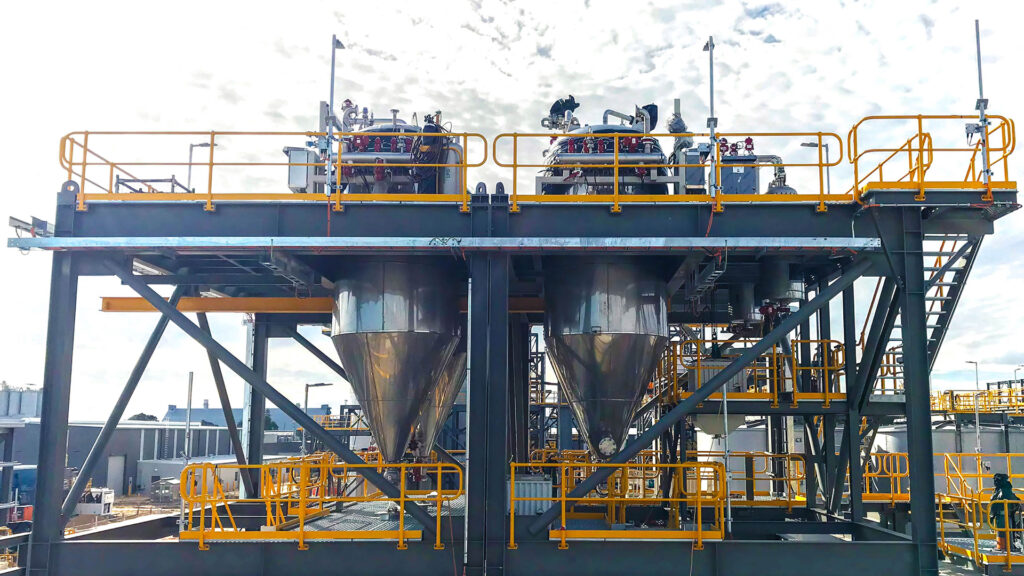
Terminal bolts are structural fasteners that secure the connections between equipment bases, columns, and retaining parts. Providing quality assurance for terminal bolts is critical for safety and long-term performance. It also prevents failures that cause structural damage, vibration amplification in spinning machinery, and loss of containment in tanks or modules. The quality assurance process involves material verification, dimensional and visual inspections, mechanical testing, corrosion protection verification, torque control, and installation quality assurance. Quality assurance for terminal bolts assures joint integrity under operational loads, protects high-value processing equipment, lowers lifecycle costs, and promotes regulatory confidence. This ensures that the bolts function reliably as the core elements of lithium infrastructure.
The application of terminal bolts in Chile’s lithium infrastructure
Terminal bolts fasten structural, mechanical, and safety-critical components of Chile’s lithium extraction and processing infrastructure. The bolts are designed as load-transfer components that assure structural integrity, operational continuity, and regulatory compliance. Terminal bolts offer the following functions in lithium operations.

- Foundation anchorage for processing plants—terminal bolts secure equipment baseplates and structural columns to reinforced concrete foundations. They resist tensile uplift forces, transferring shear loads and controlling overturning moments.
- Seismic load resistance—lithium facilities must remain operational after moderate seismic events. Terminal bolts provide ductile tensile resistance, maintain load path continuity between equipment and foundations, and prevent sliding of tanks.
- Structural frame and steel connection integrity—terminal bolts connect beams, columns, gusset plates, and bracing members. The bolts ensure shear transfer across joints, maintain alignment under loads, and enable controlled structural flexibility.
- Tank and containment stabilization—terminal bolts anchor bank bases to concrete pads to prevent sliding. They also prevents uplift during dynamic events and misalignment that could compromise piping systems.
Lithium meets global demand in Chile’s energy sector
Lithium is an important substance in current energy systems because it allows for high-density, rechargeable energy storage on a large scale. It is critical for electrification in the transportation, power production, and industrial sectors to ease the transition from fossil fuels. Here’s how lithium meets world energy demands.
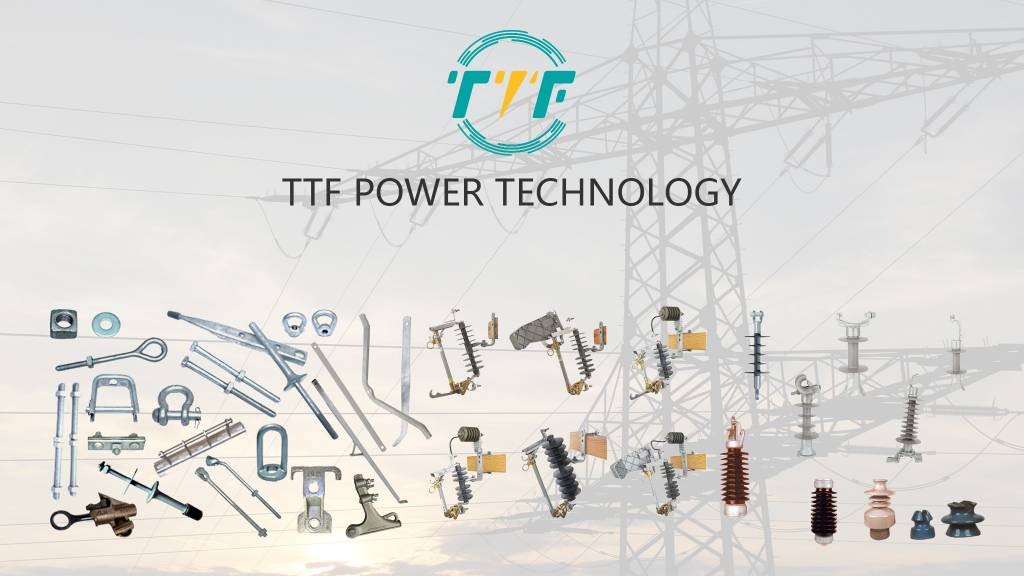
- Lithium in electric vehicle batteries—lithium-ion batteries offer high energy density, long cycle life, high charge-discharge efficiency, and favorable weight-to-power ratios. This makes it essential for passenger EVs, electric buses, and commercial fleets.
- Grid-scale energy storage systems—lithium-ion battery energy storage systems stabilize grids for electricity delivery. This is by shifting energy from peak generation, provide frequency regulation, and support voltage stability.
- Renewable energy integration—lithium storage complements wind and solar systems integrated into lithium production. This is by reducing intermittency constraints, increasing renewable penetration, and improving dispatchability.
- Industrial electrification and backup power—lithium batteries support data center backup systems and telecommunications infrastructure. They also support industrial microgrids and remote operations.