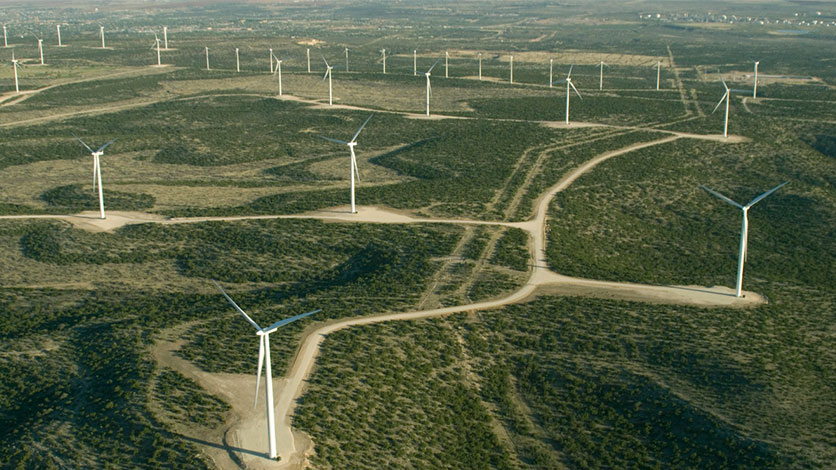
The northern state of Bahia in Brazil contains 28 operating wind farms that generate energy for the region. The region also features data centers, which consume a lot of electricity. This has resulted in requests to connect data centers to the electrical grid. Using wind energy could reduce energy demand while decreasing reliance on fossil fuels like thermal energy. The plenty of wind farms in the area also provides chances to install electricity-intensive computing infrastructure near renewable power. The connectivity might also benefit the region by luring AI, cloud computing, and digital infrastructure companies looking for access to renewable electricity. To provide continuous energy supply, the project would include wind farms, grid connections, BESS, UPS systems, backup generation, and advanced energy management systems. The interconnection relies on robust hardware such as preformed tension clamps. This design would allow the data center to consume wind power when available.
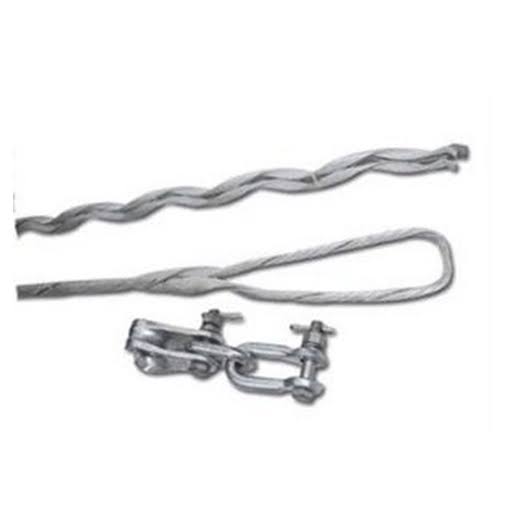
Preformed tension clamps ensure stable, long-lasting, and damage-free terminations for overhead conductors and cables. They form the foundation of the electrical collecting and transmission system. The clamps secure overhead cables at terminal towers, substation entrances, and other deadend locations. The clamps grasp the conductor to maintain proper mechanical tension, preventing excessive sag and ensuring safe clearances under changing conditions. Their helical form allows them to wrap around the conductor and equally distribute the gripping force. This grip lowers stress levels and protects the conductor from wear and fatigue. Preformed tension clamps enable stable performance under tension in the face of severe winds, ice, and temperature fluctuations.
Quality verification of prepared tension clamps in wind turbine infrastructure for data centers
Preformed tension clamps connect wind farms to substations, transmission systems, and high-load customers such as data centers. The quality of the clamps affects mechanical integrity, conductor security, grid dependability, and maintenance requirements. Quality-assured, prefabricated tension clamps provide a high-reliability electrical path for data centers.
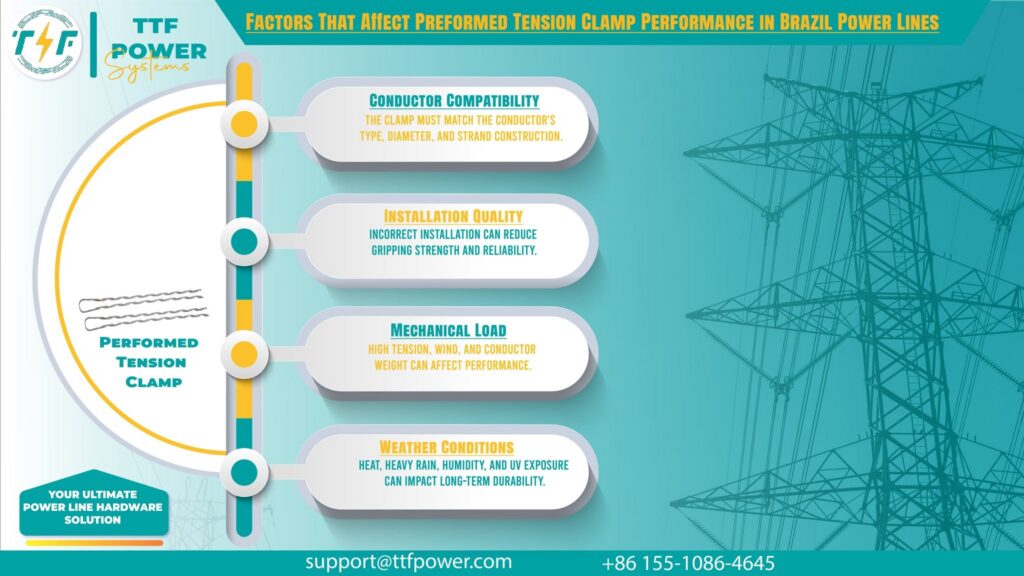
QA aids in the detection of faults that contribute to displacement, mechanical failure, downtime, and costly maintenance. Material verification, dimensional inspection, tensile testing, slippage testing, corrosion evaluation, and conductor compatibility are all covered under quality assurance. QA teams inspect the clamp model and conductor size during installation, as well as the helical alignment, lack of excessive bending, attachment to the insulator, and installation torque.
The significance of prefabricated tension clamps in wind farm infrastructure supporting data centers.
Preformed tension clamps are used to terminate and secure overhead conductors or OPGW cables at deadend, angle, and tension structures. They do this by shifting mechanical loads to towers and other gear. This improves the reliability of wind farms that supply electricity to data centers in Brazil. Here are the major functions of tension clamps in infrastructure.
- Supporting grid reliability—high-quality tension clamps help reduce the probability of conductor displacement. They strengthen the mechanical reliability of the transmission connection.
- Maintaining continuous renewable power delivery—the clamps contribute to the physical integrity of the overhead circuits carrying electricity through the transmission network.
- Reducing conductor damage—the clamps distribute mechanical forces along the conductor and reduce harmful stress concentrations. The clamp is designed around specific conductor diameters, construction, and lay characteristics.
- Improving infrastructure resilience—the tension clamp helps the line tolerate strong wind loading, aeolian vibration, temperature cycling, mechanical tension, and conductor movement.
Technologies that connect wind farms, the grid, and BESS to data centers
A physical transmission connection is insufficient for the integration of wind farms, electrical grids, BESS, and data centers. The connection is based on coordinated power electronics, protection, communications, forecasting, and energy-management technologies that can handle variable renewable generation. This is accomplished while retaining the high power quality and dependability that data centers need. These technologies include:
- Wind turbines and wind-farm collection systems—modern wind turbines include power converters, medium-voltage cables, switchgear, protection relays, and SCADA systems.
- High–voltage transmission infrastructure—the system includes high-voltage overhead lines, power transformers, circuit breakers, disconnectors, surge arresters, and substations.
- Grid-forming inverters—grid-forming BESS can provide fast frequency response, voltage stabilization, improved fault recovery, and improved integration of inverter-based renewable generation.
- Power management systems—the energy management system coordinated the wind farm, BESS, grid connection, and data center demand.
- UPS and power-quality systems—data centers need stable electricity. The stable supply comes from UPS systems, automatic transfer switches, static transfer switches, voltage regulation, and surge protection.