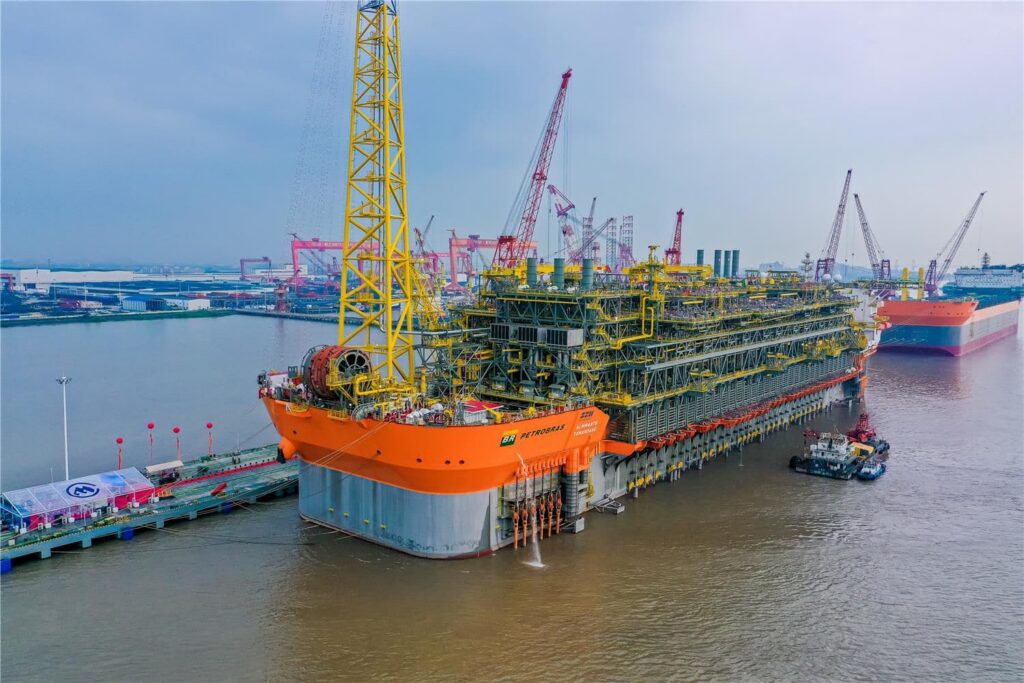
SBM Offshore has chose Siemens Energy to provide power generation and gas compression equipment for Petrobras’ platforms in Brazil’s Sergipe-Alagoas basin. The equipment will be installed on floating production, storage, and offloading (FPSO) ships that support two platforms, P-81 and P-87. SBM Offshore will deliver and operate both FPSOs. These pipelines will connect to a specialized gas export conduit designed to send gas from offshore areas to onshore facilities. Pumps, compressors, separation gear, control systems, lighting, water treatment, and different auxiliary systems all need a consistent power supply aboard FPSOs. Siemens Energy’s power production equipment will play an important part in the boats’ electrical system. The electrical framework needs dependable elements that can function in tough maritime conditions. This situation generates a need for devices and hardware like cable accessories, connectors, spool bolts, surge protection devices, and insulators.
High-quality bolts secure and support cables, conductors, and brackets in electrical and offshore applications. They provide mechanical stability, alignment, and dependable equipment-to-equipment connections. Spool bolts in the FPSO contribute to the integrity of mounted electrical and mechanical assemblies. They also minimize cable abrasion, excessive bending, and interference with nearby equipment. Properly specified bolted connections help to prevent loosening and displacement. They keep interconnected equipment and support components in the proper places. In the offshore environment, corrosion resistance, mechanical strength, dimensional correctness, and fastener reliability are critical. Using spool bolts is part of a mechanical support system that protects electrical connections from vibrations and movement.
Quality control for spool bolts used in FPSOs and electrical equipment
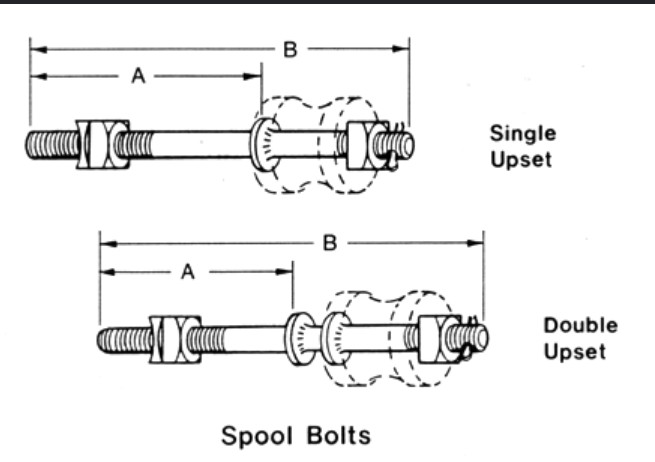
Spool bolts in FPSO equipment are subjected to vibration, salinity, temperature changes, mechanical loading, and rigorous installation circumstances. Quality assurance is concerned with the project’s material requirements, applicable Petrobras specifications, and international standards. Supplier quality evaluations include the quality management system, manufacturing process, finished product, and inspection records. QA guarantees that all spool bolts installed on an FPSO have the required material, size, mechanical qualities, and surface protection. Quality assurance is critical since Petrobras project documentation includes technical specifications, inspection criteria, and the applicable classification society for FPSO projects. Thread damage, insufficient strength, corrosion, inappropriate torque, and dimensional flaws are examples of spool bolt failures that can be avoided with quality assurance.
The significance of spool bolts in FPSOs and electrical equipment
Spool bolts are useful for building and securing support structures, brackets, equipment interfaces, and cable-support systems. Reliable spool bolts can tolerate vibration, dynamic loads, corrosion, temperature changes, and prolonged use. The bolts provide a secure mechanical connection, ensuring cable routing, equipment positioning, and support integrity. Here are their duties inside the infrastructure.
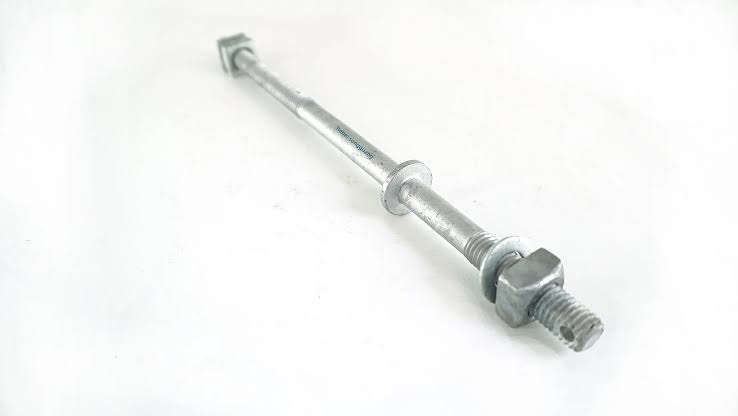
- Securing equipment and support assemblies—spool bolts provide mechanical fastening between components. They connect brackets, supports, clamps, mounting structures, and equipment interfaces.
- Supporting cable and electrical interconnections—the bolts serve in support arrangements for cables, trays, conduits, and electrical equipment. They maintain the component position to prevent bending, abrasion, and mechanical loading on cables.
- Maintaining structural alignment—properly bolted connections help keep interconnected components aligned. This alignment is crucial where equipment, cable entries, supports, and connection points remain within specified installation tolerances.
- Withstanding installation and maintenance—bolted connections are easier to dismantle and reassemble than a permanent welded connection. This is crucial during equipment replacement, inspection, maintenance, and modification activities.
- Maintaining mechanical integrity of interconnection systems—spool bolts help transfer and distribute mechanical loads through support assemblies.
The impact of gas export pipes on Brazil’s gas market
The gas export pipeline is a vital link between Brazil’s offshore gas reserves and the domestic gas market. Petrobras is moving on with its Seripe Aguas Profundas (SEAP) programs to increase domestic gas supply. To increase domestic gas supplies. Here are their primary contributions to the Brazilian gas market.
- Linking offshore output to onshore needs—the pipeline offers the necessary connection for transporting processed gas from offshore FPSOs to onshore facilities. The link enables gas generated offshore to be commercially viable instead of being confined to the production location.
- Enhancing domestic gas supply—the initiative aims to boost national gas availability through anticipated processing capabilities. The pipeline infrastructure will thus ease the transformation of offshore production capacity into real market supply.
- Aiding gas-fired power production—natural gas offers flexible generation that supports intermittent renewable sources.
- Generating infrastructure and equipment requirements—the establishment of an offshore gas export pipeline created a need for specialized infrastructure.