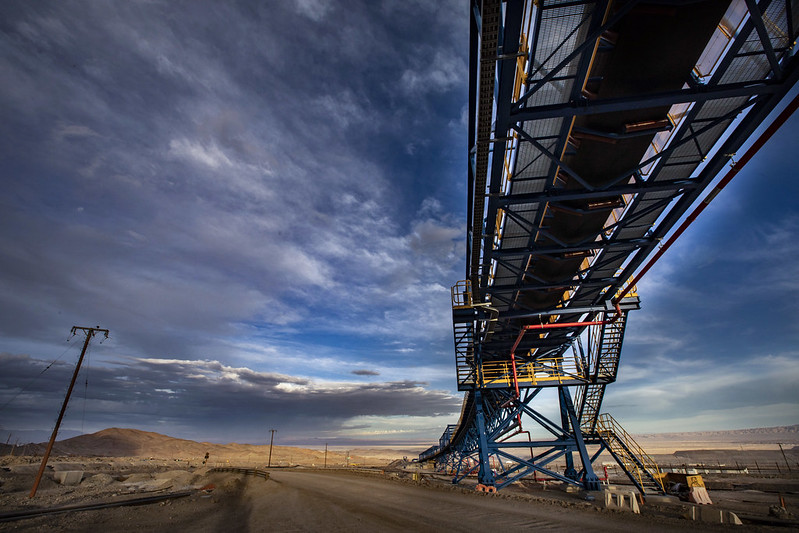
The Vicuna Project, which includes the Josemaria deposit in San Juan Province and the Filo del Sol in the Antofagasta region, has the greatest copper-focused mining investments in South America. The project has received investments that will have an impact on its structural, operational, and strategic dimensions. Chilean mining corporations are targeting 100% renewable PPAs to meet their ESG requirements. Vicuna’s demand profile enhances the long-term viability of renewable projects, BESS growth, and grid flexibility investments. The project has the potential to speed up the expansion of Argentina and Chile’s Sistema Electrico Nacional (SEN), which coordinates power across borders. It also strengthens Chile’s connectivity lines. It also results in infrastructure expenditures that improve regional grid dependability for mining uses. The growth of this infrastructure relies on aluminum wedge deadends.
Wedge deadends anchor and secure overhead cables at endpoints on drill rigs, camps, and processing plants. They provide stable and reliable power to remote and energy-intensive mining operations. The dead ends retain conductors under high tension to endure loads from wind, ice, and temperature fluctuations. This helps keep wires from drooping, preventing power outages and safety problems. Aluminum wedge deadends provide secure connections between solar panels and distribution networks. They promote the use of sustainable energy and work to reduce the carbon footprint of mining activities. They also provide reliable power distribution to geophysical instruments, drilling equipment, and temporary site infrastructure.
Quality control for aluminum wedge deadends used in Chile’s mining infrastructure
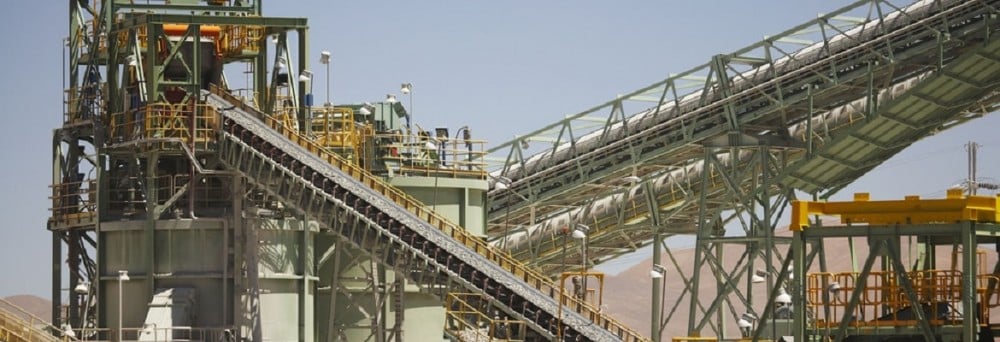
Quality assurance for aluminum wedge deadends contributes to meeting extreme environmental conditions, high mechanical loads, electrical reliability requirements, and lengthy asset life cycles. Mining operations place tremendous demands on workers due to excessive UV exposure, temperature fluctuations, dust contamination, seismic activity, and corrosive atmospheres. The housing and wedge components are from high-strength aluminum alloys. The QA checks for tensile strength, controlled elongation, set hardness parameters, and resistance to stress corrosion cracking. The wedge deadends rely on exact design to provide uniform gripping force, even stress distribution on the conductor, and strand protection. The deadends’ quality assurance method includes CNC dimensions verification, surface roughness inspection, and statistical process control during batch production. A structured QA framework ensures mechanical retention integrity, electrical reliability, personnel safety, and long-term operational continuity in high-capital mining environments.
Chile’s mining infrastructure using aluminum wedge deadends
Aluminum wedge deadends provide mechanical and electrical termination in Chile’s mining infrastructure. Deadends ensure conductor stability, electrical continuity, and operational reliability throughout power distribution networks. The mining infrastructure’s wedge dead ends provide the following functions.
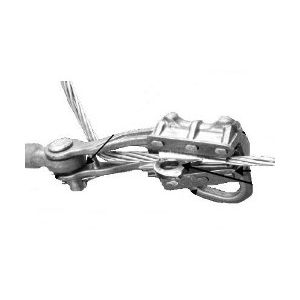
- Conductor termination and tension retention—the aluminum wedge deadends terminate overhead conductors, maintain mechanical tension, and anchor conductors at poles and substation structures.
- Load transfer to support structures—the deadends transfer mechanical loads from the conductor. It transfers the loads to steel poles, lattice towers, substation gantries, and structural frames in processing plants. They withstand thermal expansion and contraction and seismic movement.
- Electrical continuity and system integrity—wedge deadends maintain electrical conductivity, ensure stable current flow, and prevent localized resistance increases. Poor termination creates high-resistance joints. These leads to overheating, energy losses, and conductor degradation.
- Support of medium- and high-voltage distribution—the deadends serve in poles, angle structures, substation entry points, and temporary power rerouting. They secure conductors in permanent and semi-permanent installations.
Copper’s role in Chile’s mining infrastructure and grid expansion
Copper mining contributes to transmission and grid expansion in Chile’s mining infrastructure. It meets new electrical infrastructure need for material input, allowing grid development. Transmission expansion allows for mining growth, whereas mining demand justifies and sustains grid upgrading. Here’s how copper mining impacts transmission and grid expansion.
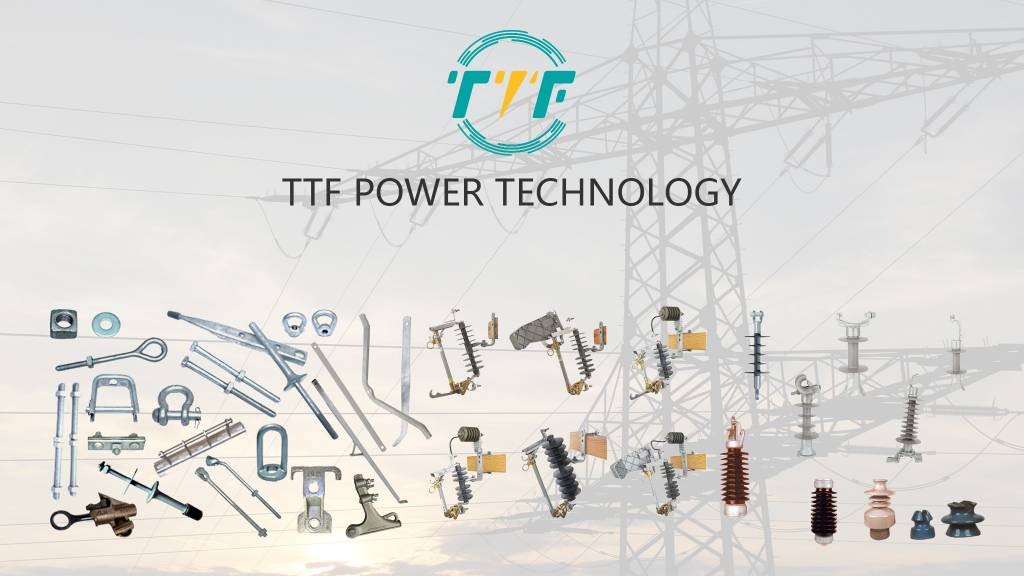
- Anchor demand for transmission expansion—copper mining acts as a base-load industrial anchor that justifies transmission investments. It helps in the construction of new high-voltage transmission lines and substation expansions. It also helps reinforce long-distance corridors linking renewable generation zones to mining centers.
- Renewable integration into the grid—transmission expansion is helps evacuate solar generation and stabilize variable output. Copper mining stabilizes the grid by absorbing large volumes of renewable power.
- Electrification of mining operations – electrification increases peak demand and needs higher-capacity substations, reinforced distribution feeders, and improved reactive power compensation systems.