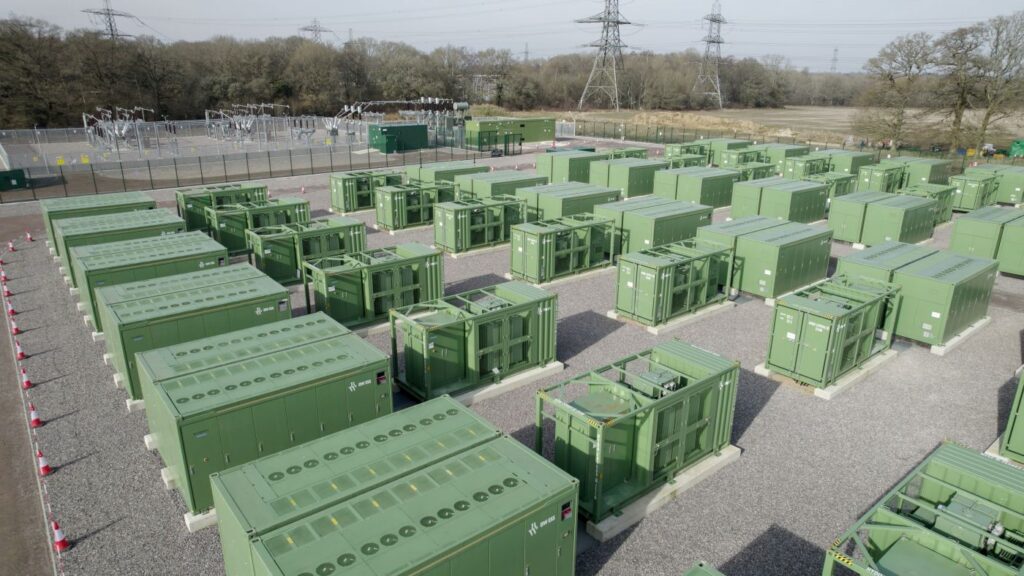
Argentina’s Buenos Aires province intends to invest 31 billion in massive batteries to prevent blackouts. The project will have a 25 MW/125 MWh battery energy storage system. This initiative will assist reduce the region’s reliability issues. The province is deploying energy storage in strategic spots where the grid is stressed during demand peaks. During these peak demand periods, substations and transmission cables become overburdened. BESS will provide and supply electricity precisely where and when it is required, avoiding lengthy grid expansion procedures. BESS also improves the incorporation of renewable energy resources. This is accomplished by storing excess solar generation, transferring renewable energy to nighttime demand periods, smoothing out swings in renewable output, and decreasing renewable energy curtailment. These projects rely on robust hardware such as double clamp brackets to fasten terminals of energy storage components such as batteries and capacitors.
Double clamp brackets secure two cables, conduits, grounding conductors, busbars, or structural parts to frames, mounting rails, poles, or equipment enclosures. They use a dual-clamping system, which gives greater stability than single-clamp devices. The clamps provide a direct electrical connection between BESS components, allowing current to flow from one terminal to another. The clamp eliminates the need for extra busbars and minimizes the module’s electrical resistance. Double clamp brackets also provide a connecting point for voltage monitoring or charge-balancing circuits. The clamp holds the battery modules in place and provides a dependable electrical connection for power and signal transfer. In addition, they serve in BESS systems for electrical support structures, grounding assemblies, inverter stations, transformer yards, and auxiliary equipment installations.
Quality assurance of double clamp brackets in BESS projects
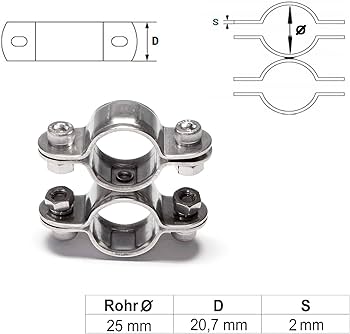
BESS projects rely on dependable mechanical and electrical infrastructure to run safely and efficiently. Double clamp brackets are used to secure cables, conduits, busbars, mounting rails, grounding wires, and auxiliary equipment. They ensure structural integrity and best alignment. Quality assurance for clamps ensures that each bracket satisfies design specifications, industry standards, and project needs. Double clamp bracket quality assurance entails a systematic procedure of verifying materials, manufacturing methods, dimensional accuracy, protective coatings, and mechanical performance. High-quality brackets increase the reliability of BESS installations by eliminating premature failures that could jeopardize safety. Quality assurance assures that each bracket has consistent mechanical strength, corrosion resistance, perfect fitting, and long-term durability even in difficult working situations.
Functions of double clamp brackets in BESS projects in Argentina
Argentina is increasing its battery energy storage capacity to improve grid stability, incorporate renewable energy, and ease transmission restrictions. Double clamp brackets serve crucial structural and cable management responsibilities, ensuring that BESS facilities operate safely and efficiently. Double clamp brackets are made of hot-dip galvanized steel, stainless steel, or corrosion-resistant aluminum alloy. These materials assure its longevity even in harsh environmental conditions. Here are their primary responsibilities in BESS projects.
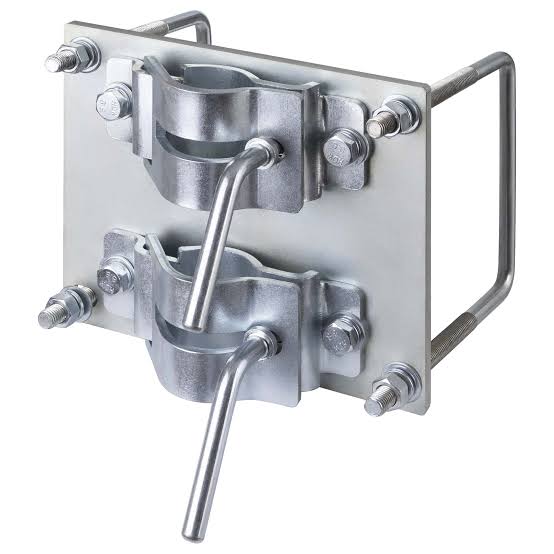
- Secure cable management – double-clamp brackets organize and secure power, communication, and fiber-optic cables. They prevent movement caused by vibration or thermal expansion.
- Supporting high-power electrical infrastructure – the clamps provide stable support for heavy-duty conductors, cable trays, conduits, and busbar systems.
- Maintaining mechanical stability – the brackets distribute loads across support structures to help prevent loosening, deformation, or structural fatigue.
- Protecting grounding systems—double clamp brackets hold grounding conductors in position. They ensure the grounding network remains intact throughout the operational life.
- Simplifying installation – the clamps reduce the number of individual fittings needed during construction. They help improve installation efficiency, cable routing consistency, and construction timelines.
BESS reduces outages in Argentina
Argentina is investing in battery energy storage devices to increase the dependability of its power grid as renewable energy output grows. BESS projects offer a quick and adaptable solution by storing electricity when supply exceeds demand. Here’s how BESS reduces blackouts in Argentina.
- Addressing peak electricity demand—BESS reduces demand stresses by discharging stored electricity during high demands and reducing loads on substations and transformers.
- Relieving transmission congestion – BESS does this by storing excess electricity near renewable generation sites and improving grid flexibility.
- Stabilizing grid frequency—the projects respond to blackouts by injecting power when frequency drops, providing fast frequency regulation, and supporting grid stability.
- Reliable renewable energy integration—BESS improves the integration by storing excess solar generation, capturing surplus wind energy, and delivering stored electricity.