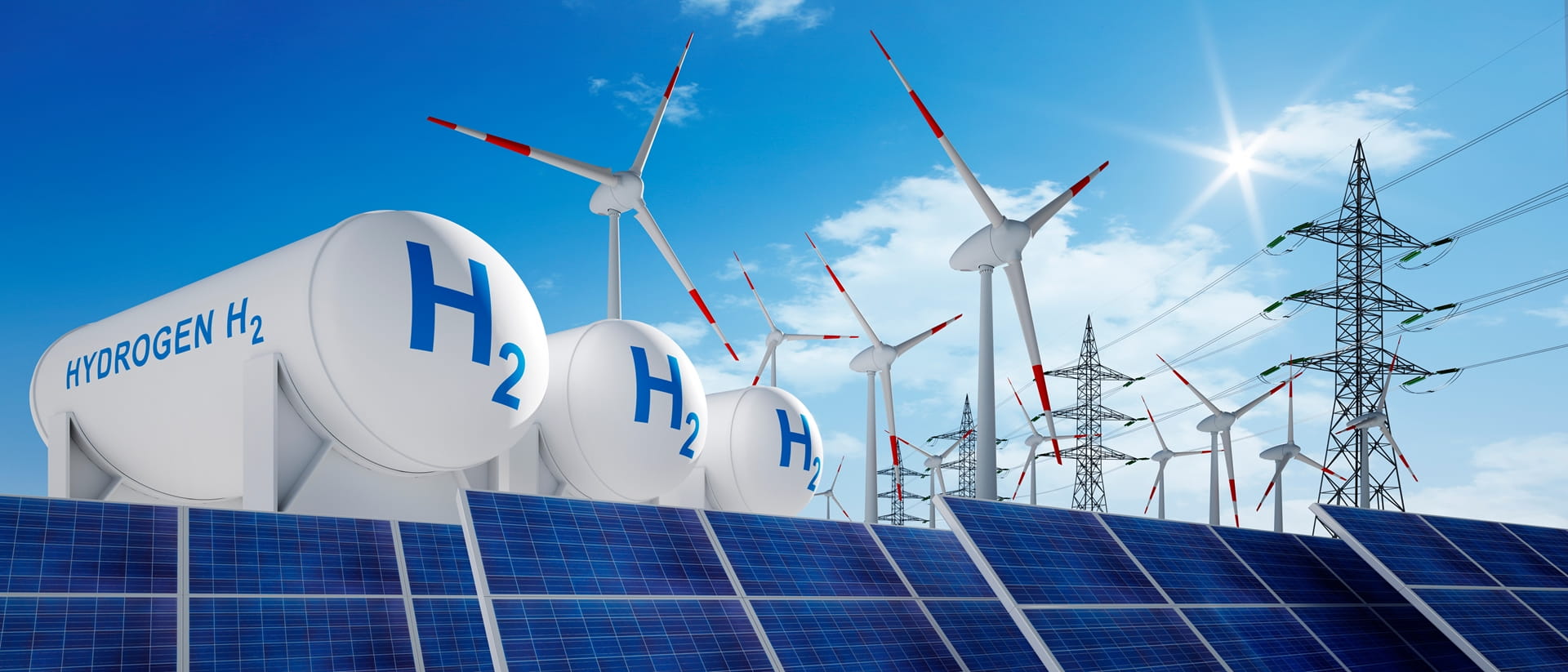
Chile is now building its first industrial green hydrogen plant at a power generation facility in the Nehuenco thermoelectric complex. The project costs $1.6 million and runs independently of the national grid. It uses PV electricity to generate hydrogen for its generators’ cooling systems, replacing gray hydrogen supplied from fossil fuels. The project will consist of a 100 kW solar array, battery storage, electrolyzers, and hydrogen storage tanks. Such infrastructure necessitates the employment of high-quality power line hardware, such as drop wire clamps. Drop wire clamps improve the dependability and safety of the electrical distribution network that powers the green hydrogen ecosystem. They help to transport solar-generated electricity from the grid to the hydrogen production plant.
The green hydrogen project consists of solar farms, inverters and transformers, high-voltage transmission lines, substations, battery storage, and a hydrogen production facility. Drop wire clamps play an important role in connecting the local electrical distribution grid to the electrolyzer facility. Drop wire clamps are mechanical fasteners that secure an electrical service drop cable to a supporting messenger wire. The clamps support the mechanical stress while keeping the electrical cables from sagging, straining, or breaking.
The clamps are intended to electrically disconnect the live conductor from the supporting messenger wire. This prevents short circuits and ground faults while also ensuring the safety of personnel and the public. To guarantee that the hydrogen production process runs well, an electrolyzer requires a consistent and dependable power source. Using high-quality, properly placed wire clamps assures greatest uptime. The clamps help to achieve the aims by ensuring reliability, increasing safety, and providing durability. These components ensure the system’s efficiency.
Application and significance of green hydrogen in Chile’s energy sector
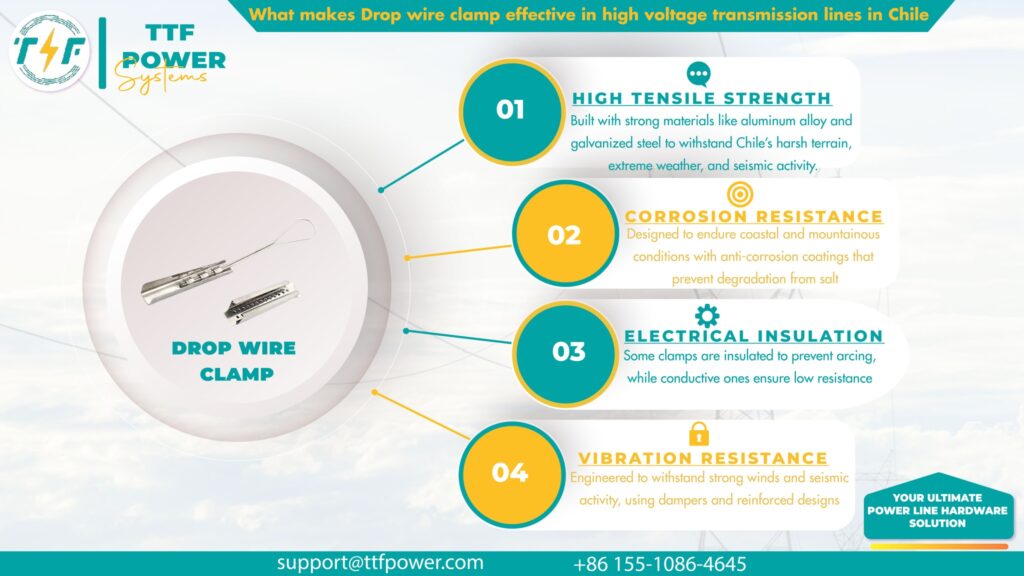
Green hydrogen is an important step in Chile’s transition to a greener, more robust energy system. Green hydrogen contributes to the decarbonization of fossil-fuel-dependent sectors such as mining, refining, and fertilizer production. It offers a clean alternative that can reduce emissions in various sectors. Green hydrogen drives the transportation industry by introducing hydrogen-powered trucks, buses, and port equipment. Chile plans to convert renewable hydrogen into ammonia, methanol, and synthetic fuels. The goods create global export prospects for the maritime and aviation industries. Green hydrogen is critical to Chile’s energy industry because it harnesses vast renewable resources, reduces reliance on fossil fuels, and strengthens energy transition infrastructure.
The role of drop wire clamps in green hydrogen projects
Drop wire clamps ensure the electrical infrastructure for green hydrogen production is safe and reliable. The hydrogen system is powered by solar energy and is integrated with local electrical infrastructure. This necessitates robust physical cable support, which adds to operational safety in sites with hydrogen and high-voltage systems. The following are the functions of drop wire clamps in green hydrogen projects.
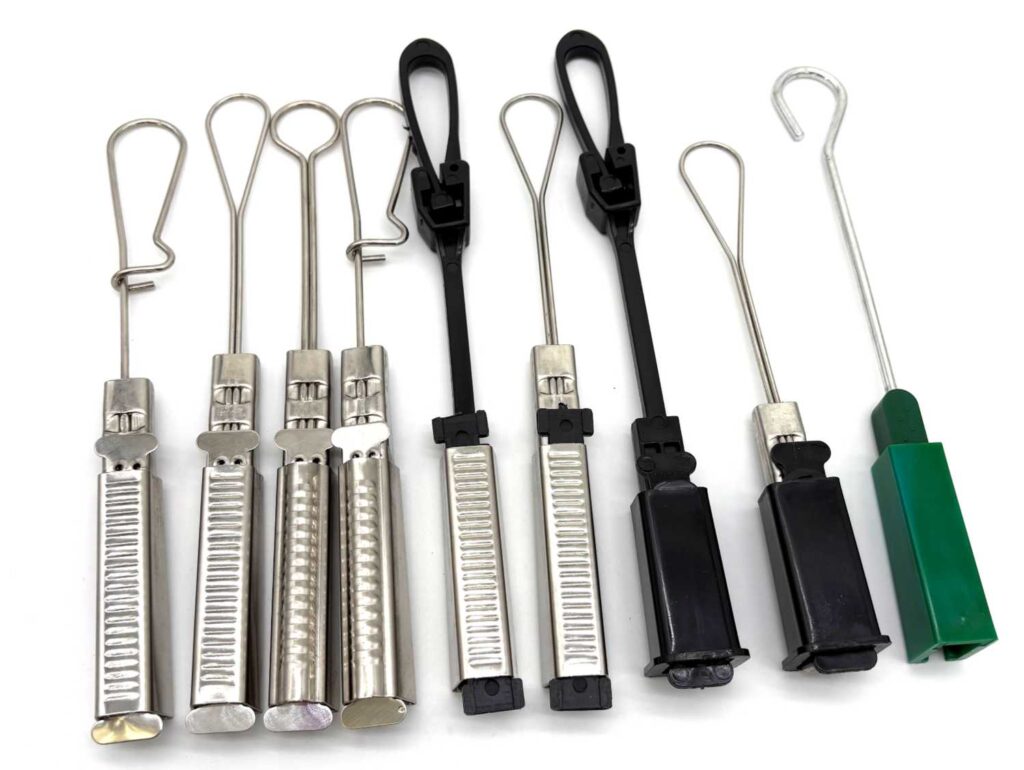
- Secure support for overhead lines feeding PV and other systems—solar arrays and auxiliary electrical lines supply the hydrogen unit. Drop wire clamps hold conductor wires in place on poles to prevent sagging.
- Protection of cabling under variable outdoor conditions—drop wire clamps maintain tension and protect wires from wind, vibration, and weather.
- Maintaining electrical integrity for sensitive systems—electrolyzers and hydrogen safety demand consistent power flow. Drop wire clamps ensure secure mechanical anchoring to prevent line strain.
- Ease of installation during phased development—drop wire clamps allow fast mounting of temporary or permanent overhead lines as projects expand.
- Supporting communication and monitoring lines—the clamps secure telecom or sensor cables supporting digital oversight of hydrogen production and storage.
Potential barriers to green hydrogen project development in Chile
Colbún’s efforts to generate green hydrogen are promising, but expanding from a tiny operating unit to an industrial scale presents problems. Green hydrogen production and adoption are still in the development stages around the world. High production costs at current scale are projected, as are worries about technical maturity and dependability, large renewable power demand, water availability, infrastructural and storage gaps, market uncertainty, and regulatory and policy change. Chile’s renewable energy, strategic vision, and industrial players like Colbún offer it a competitive edge. Companies can overcome these problems to ensure the success of the hydrogen manufacturing business. Additionally, the use of power line hardware such as drop wire clamps facilitates the integration of renewable energy into Chile’s green hydrogen manufacturing sector.