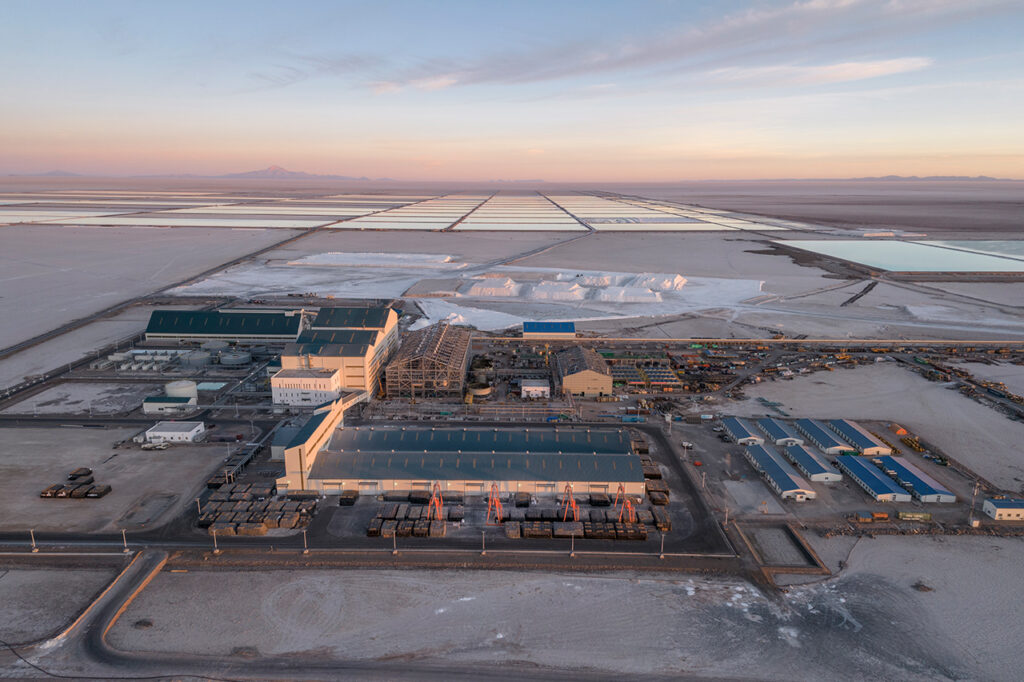
Bolivia recently recorded an increase in lithium carbonate exports, reaching $19.6 million by August 2025. This represents a 1,145% growth compared with the same period last year. Bolivia maintains one of the largest lithium deposits globally in Salar de Uyuni. Lithium carbonate plays a crucial role in the production of rechargeable batteries for vehicles and electronic devices. In this context, the downlead clamp secures the power infrastructure supporting lithium carbonate production. Its reliable performance is a non-negotiable prerequisite for manufacturing the high-quality batteries powering the electric vehicle evolution.
Most South American countries explore strategic partnerships with China to strengthen the industrialization of their lithium sector. This partnership takes into account China’s leadership in innovation and the sustainability of lithium-ion batteries. The lithium carbonate production process includes brine pumping, preconcentration, impurity removal, conversion to carbonate, filtration, and quality control. Lithium processes depend on reliable electricity from grids, gensets, or renewables. Downlead clamps connect a vertical electrical conductor like a transformer.
Downlead clamps provide a strong, reliable mechanical connection supporting the weight of the downlead conductor. It ensures a low-resistance electrical path to alow for the efficient transfer of very high currents from overhead lines. This sends electricity down the processinng equipment without energy loss. The downlead clamp is designed to allow for some thermal expansion and contraction of the conductor. This prevents metal fatigue and breakage caused by constant heating and cooling cyles. This is crucial for components such as valves, pumps, reactors, pipe sections, and instrumentation.
Impacts of increased lithium carbonate capacity with downlead clamps supporting the infrastructure
Bolivia is becoming a potential lithium producer from the vast deposits in the Salar de Uyuni. Scaling up lithium carbonate production impacts the energy sector from industrial development and renewable integration to power grid expansion and policy transformation. This surge is pushing Bolivia to upgrade its power infrastructure, increase energy generation, and diversify its power mix. This demands the use of power line hardware, such as downlead clamps, to secure the connections in various infrastructure supporting production processes. Lithium carbonate integration with renewable energy could position Bolivia as a model for sustainable resource-driven energy growth.
The role of downlead clamps in Bolivia’s lithium carbonate operations
Downlead clamps are essential components as Bolivia scales up its direct lithium extraction (DLE) and evaporation pond processing. The clamps secure and guide the downlead clamp connecting overhead equipment to the grounding networks. Downlead clamps maintain the integrity and safety of piping networks, reactors, filtration systems, and brine handling units. Key functions include:
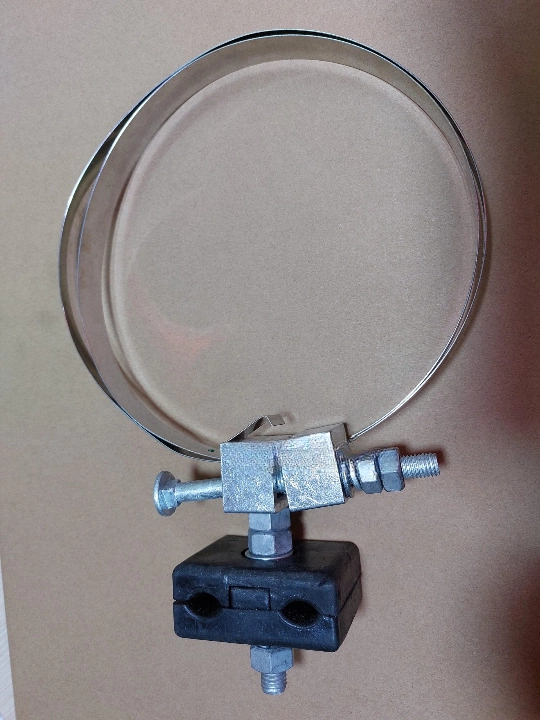
- Securing electrical downleads on transmission structures – downlead clamps hold the grounding cables that run down transmission poles. They prevent cable movement, protect insulation, and maintain cable alignment.
- Ensuring reliable grounding and lightning protection – downlead clamps keep ground wires tightly fixed to towers. They maintain a grounding path to safely discharge lightning surges and prevent equipment damage in processing plants.
- Supporting signal and control cabling – lithium operations depend on automation, SCADA systems, and IoT sensors. The clamps route fiber optic or communication cables down pylons or structural columns.
- Reducing mechanical stress and vibrations – downlead clamps distribute the cable’s mechanical load. This reduces wear and extends the service life of the power and communication lines.
The uses of lithium carbonate in electric vehicle batteries
Lithium carbonate is the starting point for most lithium-ion battery materials powering EVs. Downlead clamps play a subtle role in the resilience, safety, and efficiency o the lithium carbonate supply chain. There is research underway to use lithium carbonate in solid electrolyte production to enhance safety and energy density. Its uses include:
- Lithium carbonate battery chemistry – Lithium carbonate is a primary lithium compound used to produce cathode materials. It is the base raw material from which other lithium compounds.
- Cathode material production – lithium carbonate is used to manufacture key cathode chemistries for EV batteries. Lithium carbonate supplies the lithium ions essential for electrochemical reactions within the cathode.
- Conversion to lithium hydroxide for high-nickel batteries – lithium carbonate is often converted into lithium hydroxide for high-nickel cathode formulations.
- Battery-grade purity and performance – impurities such as sodium, calcium, and magnesium can disrupt battery chemistry, causing reduced capacity retention, lower conductivity, and shorter battery life.
- Recycling and circular use – battery recycling is crucial for sustainability as EV adoption rises. Recovered lithium can be converted back into lithium carbonate, closing the material loop. Recycling strengthens supply and security amid rising global demand.