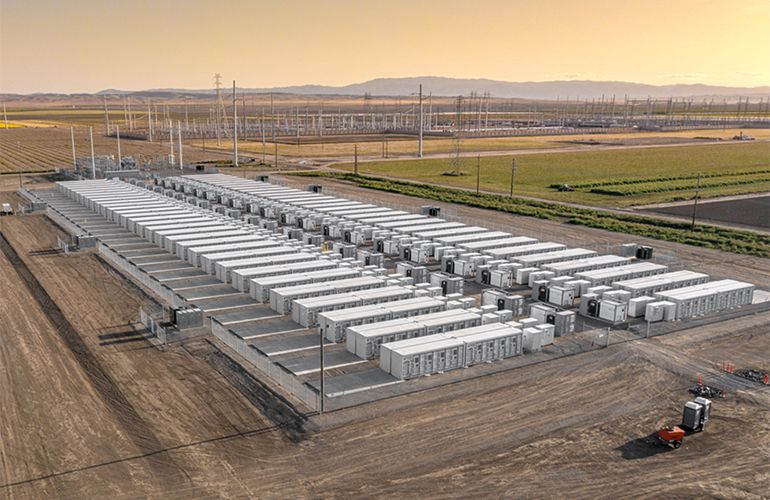
Trina Storage has announced the implementation of a 1,203 MWh utility-scale battery energy storage system in Argentina and Chile. The development is split between 722 MWh in Chile with T-power and 481 MWh in Argentina with YPF Luz. The deal with YPF Luz demonstrates BESS’ strategic role in improving grid stability and seasonal energy adequacy. Storage assets contribute to Argentina’s efforts to modernize its electricity grid by lowering reliance on thermal peaking units. This improves sensitivity to demand changes and allows for larger integration of renewables while maintaining stability. It also provides battery systems, power conversion systems, medium voltage equipment, and SCADA platforms. This contributes to faster grid integration, lower execution risk, and better operational performance. This relies on centralized monitoring, control, and data analytics via SCADA systems. Such developments and integration rely on durable hardware components such as the disc insulators.
Disc insulators insulate and support busbars and connection cables in the switchyard. It helps to keep electrical current from passing to the grounded support structures. Insulators are used on transmission towers to insulate power lines that run to and from the storage system. Electrical insulators offer dielectric strength to withstand system voltage and transient overvoltages. They aid in the prevention of flashovers and short circuits to ground, which could result in failures or grid disturbances.
Insulators bear the mechanical load of hefty conductors or busbars in Argentina’s windy regions. The construction of BESS systems necessitates upgrading existing substations or transmission lines. The disc insulators ensure that the enhanced infrastructure can withstand bidirectional power flow from the storage system. Disk insulators made of porcelain or silicone polymer restrict surface currents and tracking.
The primary functions of disc insulators in BESS system development
Disc insulators contribute to the development of utility-scale battery energy storage systems in Argentina. Providing reliable insulation to the infrastructure guarantees safe power evacuation, grid connections, and operational stability over time. The insulators ensure that battery energy storage devices are securely linked, compliant, and reliable in the power grid. The following are the major functions of disc insulators in Argentina’s BESS system development.
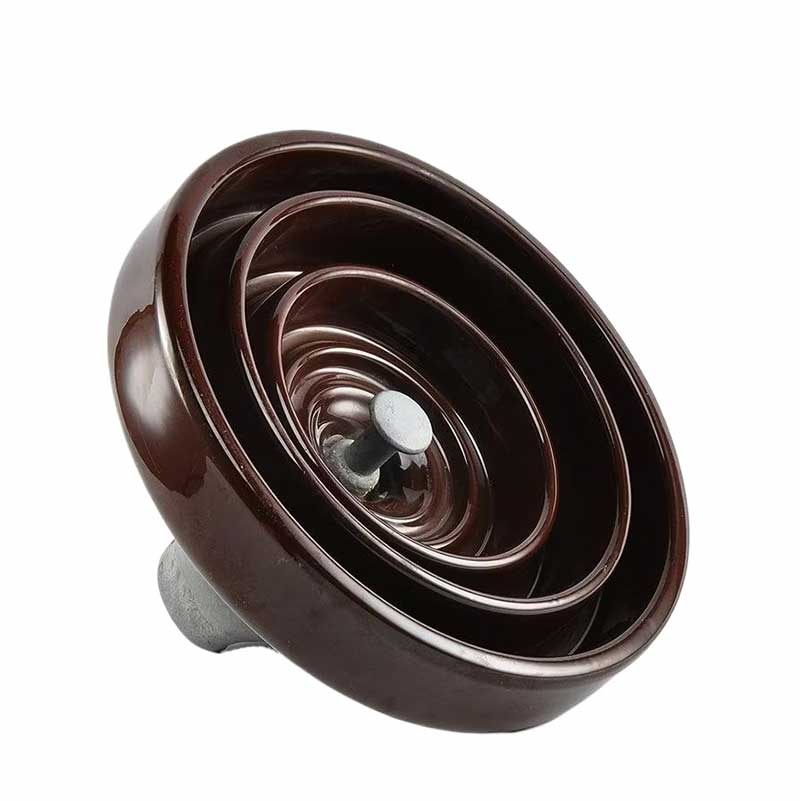
- Electrical insulation at grid interconnection points—disc insulators work on overhead line terminations, substations, and grid connection lines. These are crucial when linking storage facilities to the transmission or distribution network. The insulators isolate live conductors from grounded structures to prevent leakage currents and flashovers.
- Mechanical support for conductors and equipment—disc insulators provide mechanical load-bearing support for conductors at suspension and tension points. Their design allows engineers to stack many units to match voltage and mechanical load requirements.
- Reliability under environmental and climatic conditions—disc insulators can withstand pollution, UV exposure, wind loading, and temperature variation. They help maintain dielectric performance to operate continuously with minimal outages.
- Support for safety and regulatory compliance—disc insulators contribute to personnel and equipment safety. This helps maintain safe electrical clearances and reduce the risk of short circuits.
Contributions of BESS Development to Argentina’s Energy Sector
Battery energy storage devices help to modernize the grid, integrate renewables, and provide energy security. Thus, storage is an important part of Argentina’s technological growth. This is critical as the country strives to balance rising demand and decarbonization goals. Disc insulators provide electrical insulation and safety assurance, ensuring that battery energy storage systems are properly linked. The important contributions are:
- Strengthening grid reliability and energy security—storage systems absorb excess electricity during low-demand periods and discharge during peak hours. This helps address seasonal supply constraints and reduce the risk of outages.
- Enabling higher renewable energy penetration—BESS development helps overcome solar and wind variability by smoothing intermittency and shifting renewable generation. Storage reduces curtailment, improves capacity use of renewable plants, and enhances bankability of clean energy projects.
- Reducing dependence on thermal generation—BESS reduces reliance on inefficient peaking thermal plants. This cuts operational costs, emissions, and fuel imports and supports decarbonization goals in Argentina. Modern disc insulators reduce operational downtime and support higher system availability across Argentina.
- Enhancing system resilience and future scalability—battery energy storage improves the resilience of the grid by supporting voltage and frequency control. Its modularity and scalability allow capacity expansion as demand grows without need for new transmission infrastructure.