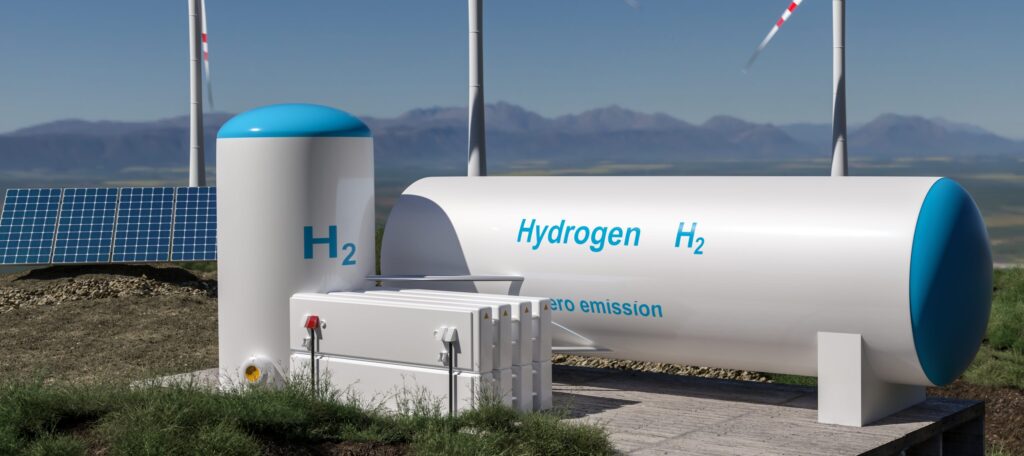
Chile is moving its focus away from the prior 25 GW electrolysis capacity goal of 2030 and toward a production volume of around 900,000 tonnes per year by 2035. This move broadens the focus from pure production capacity to consumption and export goals. The shift reflects slower worldwide market adoption, higher capital and operating costs for electrolysis, and investor apprehension over big uncontracted supply. Green hydrogen development will also result in the deployment of infrastructure and technologies. This transition requires the design, procurement, and modular deployment of electrolyzer capacity. It also requires modular electrolysis devices that can be deployed, tested, and scaled based on grid circumstances. Integration with renewables and grid infrastructure necessitates intelligent integration layers between fluctuating renewable generation and electrolysers. It also relies on advanced forecasting and power scheduling systems that help expect renewable availability and optimize hydrogen production. These connections need robust hardware like anchor rods.
Anchor rods in green hydrogen infrastructure improve the stability, safety, and lifetime of constructions in Chile’s settings. It secures heavy machinery, steel structures, and concrete foundations to prevent uplift or slide. They help to transfer dynamic and static loads from the superstructure to the foundation. These loads consist of dead loads, live loads, and environmental loads. Bolting electrolyzer modules with anchor rods helps to keep them aligned, avoid vibrations, and withstand seismic forces. Anchor rods are used on large-scale solar farms and wind turbines to secure mounting posts to ground screws. They ensure they can endure strong winds. High-quality rods hold pipe racks, sleepers, and supports that transport water and hydrogen pipelines over great distances.
Technical requirements for anchor rods in green hydrogen infrastructure
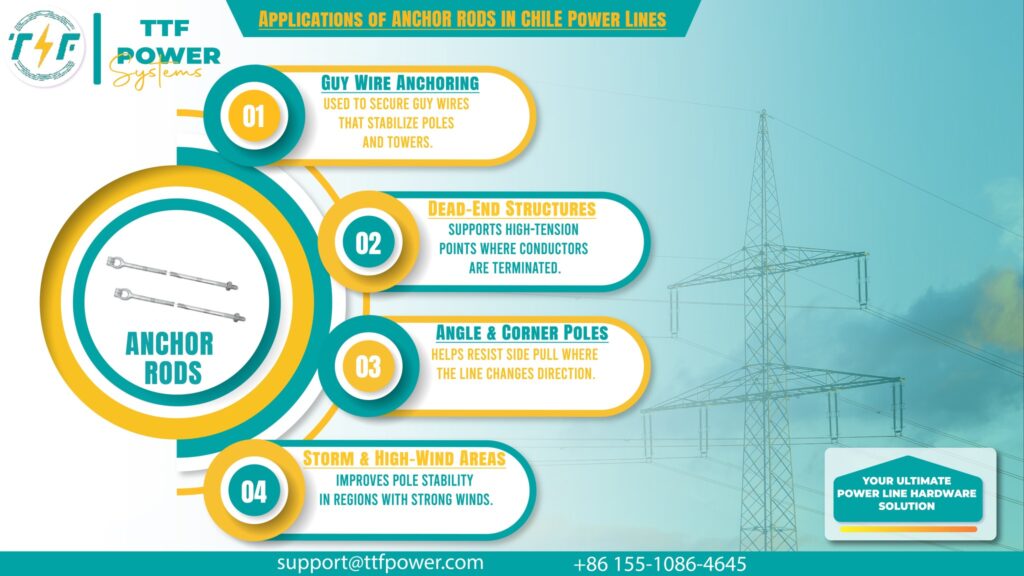
Anchor rods are heavy-duty fasteners used to secure electrolyzers, compressors, storage tanks, pressure vessels, and hydrogen piping supports. The rods can endure static and dynamic stresses, thermal cycling, and hydrogen-induced breakdown mechanisms. Anchor rod materials must be resistant to hydrogen embrittlement and corrosion while maintaining mechanical integrity. They must also withstand tensile and shear stresses, combined loads, dynamic loads, and thermal cycling. Hydrogen and electrolyte conditions can be corrosive. Surface coatings, cathodic protection, and passivation are all examples of corrosion control techniques. Quality control is crucial during the installation process. Anchor setting, concrete curing, torque verification, nondestructive testing, and hydrogen compatibility are all part of quality assurance. Anchor rods for green hydrogen infrastructure must be hydrogen resistant.
Purpose of anchor rods in green hydrogen infrastructure in Chile
Chilean green hydrogen projects include electrolysis plants, hydrogen hubs, ammonia conversion facilities, storage terminals, and export ports. Anchor rods provide load transfer, vibration control, seismic resiliency, and long-term asset reliability. Anchor rods serve several important tasks, including:

- Structural anchorage of electrolysis and process equipment—anchor rods provide mechanical connection between heavy hydrogen equipment and reinforced concrete foundations. Anchor rods secure electrolyzer skids, hydrogen compressors, power electronics, and cooling systems.
- Resistance to seismic loads—anchor rods resist horizontal shear forces during earthquakes, prevent overturning and sliding, and maintain load paths between equipment.
- Control vibration and dynamic loads—earth rods clamp equipment to foundations, prevent fatigue cracking, and preserve long-term alignment of rotating machinery.
- Securing high-pressure hydrogen systems—hydrogen infrastructure handles high internal pressures in compression units, buffer storage systems, and ammonia synthesis skids. Anchor rods counteract pressure-induced uplift forces, stabilize vessels and pipe cracks.
- Anchoring storage tanks and conversion units—the rods resist wind loads, handle thermal expansion and contraction, and provide stability under operational loads.
Green hydrogen integration with renewables in Chile
Chile’s green hydrogen plan is based on the direct linkage of large-scale renewable energy and electrolysis equipment. Chile boasts vast solar and wind resources, as well as grid capacity and lengthy export distances. It is a strategic approach to transforming renewable power into a storable and transportable energy carrier. The use of direct renewable-to-electrolyzer coupling lowers reliance on congested transmission lines. It also permits lower-cost electricity supply for electrolysis, which increases project viability. The creation of hybrid renewable configurations aids in the mitigation of renewables’ intermittent nature.
Hydrogen absorbs extra renewable generation during peak production, stabilizing use rates over time. Green hydrogen integration creates a non-grid outlet for surplus renewable energy. The development completes the loop between renewable energy generation, hydrogen production, and consumption.It creates localized energy ecosystems rather than export-only supply chains.