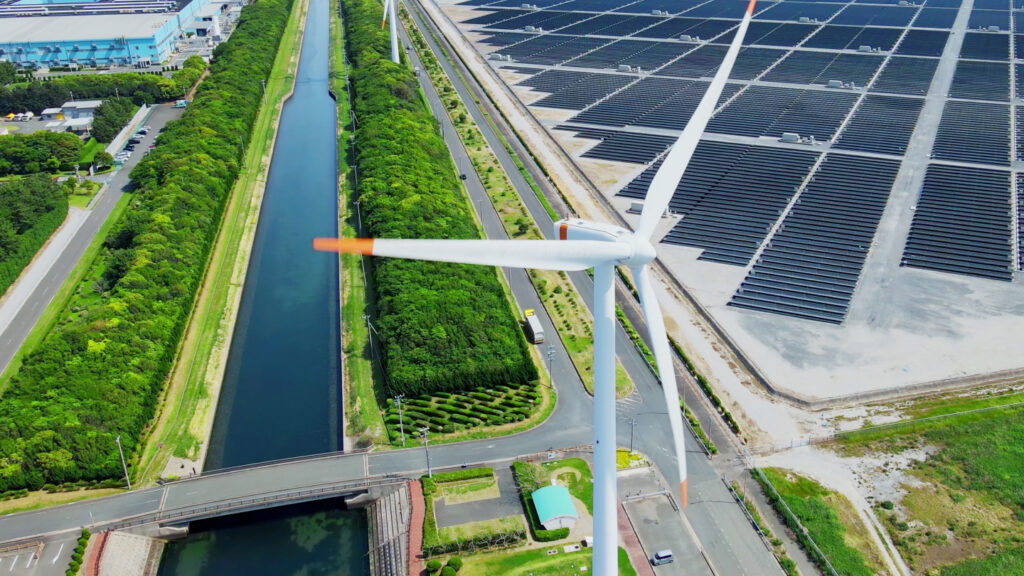
After years of relying on hydropower and fossil fuels, non-hydro renewables like solar and wind may pave the way for Peru’s energy shift. The country is seeing a substantial move toward renewable energy, fueled by global climate obligations, falling technology costs, and the need for energy security. Investment patterns are shifting away from large-scale hydropower and toward solar, wind, and green hydrogen. This is despite transition hurdles such as legal frameworks, social turmoil, and grid modernization. The most attractive field for investment in Peru is solar and wind energy. Peru uses public auctions to attract investments for approximately 1.3 GW of solar and wind projects at what were then record-low prices in the area. Notable projects in the country include the Rubi solar plant (180 MW) and the Tres Hermanas wind farm (97 MW). Corona rings are enabling components for the high-voltage infrastructure supporting energy transition.
Peru is also investing in green hydrogen, grid modernization, energy storage, transmission infrastructure improvements, distributed generation, and rooftop solar. Investors’ success will be dependent on their understanding of local social dynamics, strategic relationships, and managing the regulatory framework. The use of corona rings ensures the dependability, efficiency, and safety of transmission lines and substations that transport clean energy from new solar and wind farms. In high-voltage systems, the electrical potential can reach such a high level that it ionizes the air around a sharp conductive component. This is a corona discharge, which produces ozone gas that corrodes and destroys insulation, hardware, and conductors. The corona ring spreads the electrical field gradient around the component. It is used in transmission lines that carry electricity generated by renewable energy sources. Using corona rings helps Peru build the high-voltage grid necessary to realize its clean energy future.
Impacts of Corona Rings on Peru’s Energy Transition
Corona rings, also referred to as grading rings, are toroidal conductors installed at high-voltage stress locations. They are frequently installed at the line end of insulator strings, substation bushings, terminations, and equipment connectors. They reconfigure the electric field to keep it from being concentrated enough at any one place to ionize the air and cause a corona discharge. Corona rings function in transmission lines, renewable collector systems, substations, HVDC, and FACTS. Here are the primary roles of corona rings in Peru’s energy transition infrastructure.
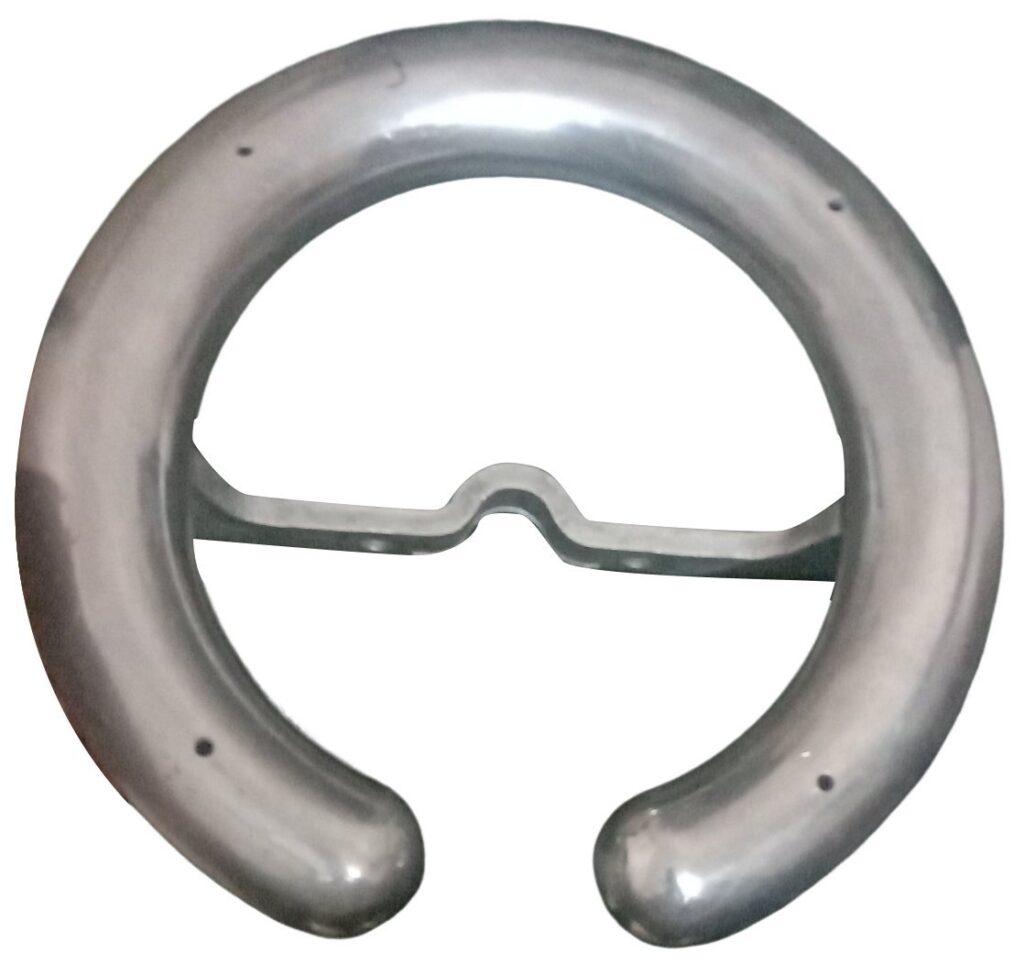
- Reduce electric-field hotspots—the rings lower peak E-field on suspension hardware, post insulators, wall bushings, and cable terminations. It is crucial on 220/500 kV interties crossing the Andes, where lower air density promotes corona.
- Suppress corona discharge and power loss—corona converts energy into heat, light, ozone, and sound. Rings keep operating gradients below corona inception, cutting no-load losses. This is crucial for long spans feeding remote mines and hybrid renewables in Peru.
- Reduce audible noise—rings limit cracking and hissing in fog, drizzle, and salt spray along the wind farms and 500 kV yards.
- Protect insulators and hardware from aging—persistent corona erodes polymer sheds and pits metal. Corona rings help extend service life, especially where access is hard, such as high-altitude structures above 3,500 m.
- Enhance insulation coordination and overvoltage behavior—the rings help equipment withstand switching surges and lightning. They complement surge arresters on solar and wind substations.
Infrastructure supporting the energy transition in Peru with rising investments
Increased investment in Peru’s energy transition promotes renewable project integration, supply mining, electricity generation, and global trading capacity. The infrastructure used includes the following:
- Power transmission—the IFC and Acciona are leading the upgrades to the grid through transmission projects. These lines will bolster capacity to integrate solar and wind energy to improve grid stability and reduce reliance on fossil fuels.
- Utility-scale renewables—this includes the use of solar power to power mining operations in Peru. It includes the new San Martin solar park and Babilonia solar.
- Distributed and rural-scale solar—this includes civil society-driven initiatives electrifying remote areas and enabling services.
- Grid diversification—Peru’s electrical grid remains reliant on hydro and natural gas thermal plants. The IFC underscores the need for battery storage systems and hybrid mini-grids to help integrate renewables and stabilize the grid.
- Export-scale infrastructure—the Chancay Megaport is a strategic infrastructure addition on Peru’s coast aiming to bolster export capacity and regional connectivity. It is crucial in supporting the broader economic shift tied to energy transition.