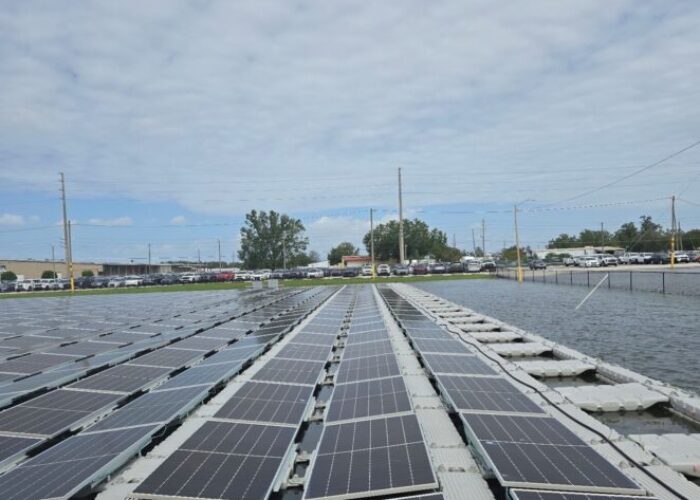
Argentina’s Arauco solar park recently marked the completion of its first fully erected row of solar panels. It marks the formal transition from preparatory work to full-scale operational assembly in one of the most strategically important renewable energy projects. The project entails the installation of photovoltaic modules that allow for on-site inspection of the solar tracking system components. This encompasses module mounting, electrical connections, and grounding systems. The development of wind and solar hybrid systems enhances capacity optimization by utilizing generation characteristics. This lowers intermittency hazards and improves grid stability. The project has 1,600 solar trackers and 94,000 photovoltaic panels, totaling 50 MW installed capacity. The plant will generate enough electricity to help cut CO2 emissions from fossil fuels. This demands the development of other infrastructure such as transformer substations and battery energy storage systems. These connections rely on components such as the fork clevis eye.
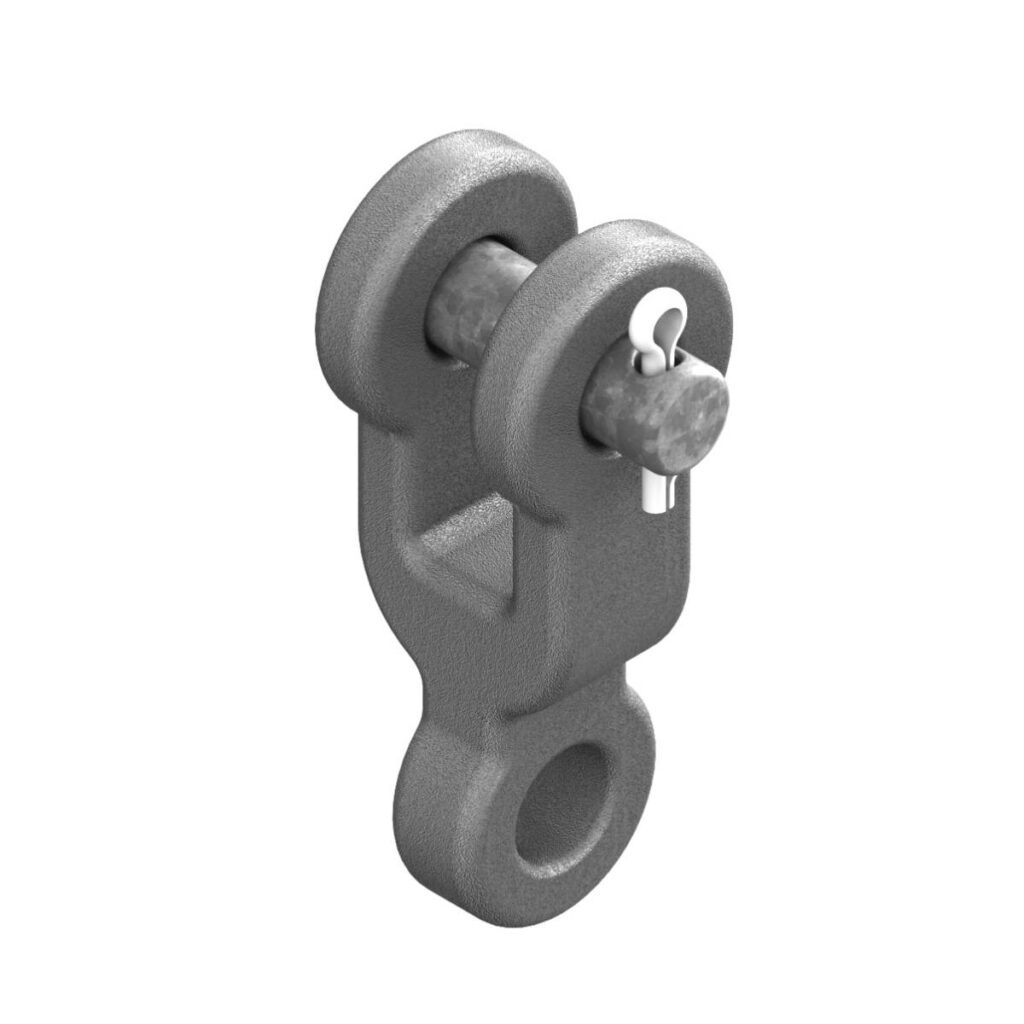
The Y-clevis eye serves in mounting systems for large-scale solar parks like the Arauco facility. It serves as the link between the rotating torque tube and the driving system for rotation. The forked end of the clevis is designed to fit around the mounting lug or bracket welded to the torque tube. To establish a robust and solid pivot point, a pin is inserted through both arms of the clevis and the lug. This allows rotational movement while supporting massive structural loads. The fork clevis eye can withstand dynamic stresses without failure. Its design directs all rotating stresses on a single, high-strength, hardened steel pin, allowing for simple inspection and maintenance. The pinned connection allows for a degree of flexibility to accommodate thermal expansion and contraction.
Technical parameters for the fork clevis eye used in solar park development
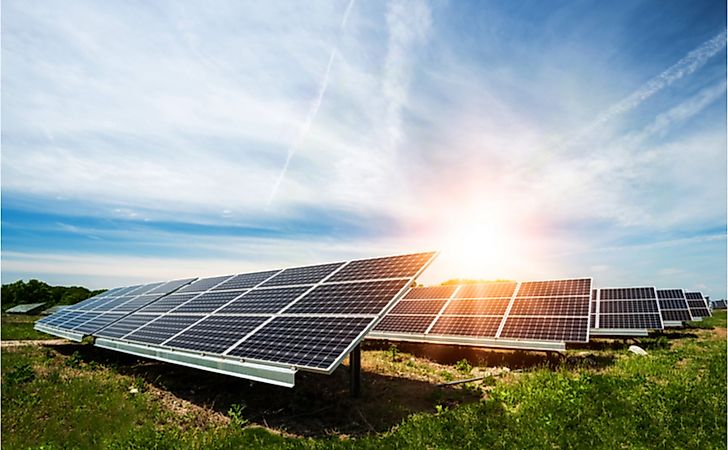
A fork clevis eye is a mechanical connector used in the racking and structural support systems. The clevis must meet engineering, material, and corrosion protection standards to assure long-term performance under structural stresses and environmental exposure. The requirements define the fork clevis eye for solar park applications under Argentina’s renewable infrastructure constraints. For example, clevis design affects the mounting system’s structural stability and load transfer integrity. Manufacturing with high-strength materials aids in achieving the lowest tensile strength, yield strength, and elongation at break. These parameters serve to guarantee that the clevis resists plastic deformation under both static and dynamic loads. The dimensions of the fork clevis eye provide controlled fit and performance. Additionally, the Y-clevis eye is specified for corrosion protection to withstand high UV exposure and coastal saline influence. Proper specification and quality control contribute to long-term reliability and performance of utility-scale solar infrastructure.
Fork clevis eye in the solar park infrastructure in Argentina
The fork clevis eye improves the load management, stability, and long-term durability of photovoltaic mounting and tracking systems in solar parks. It is critical for the performance and financial viability of major renewable energy assets like hybrid wind and solar systems. It enables the safe deployment of large-scale solar assets under a variety of environmental situations. The fork clevis eye facilitates the translation of technical design into high-performance renewable energy systems throughout Argentina. Here are the primary roles of the fork clevis eye in solar park infrastructure.
- Load transfer and structural durability—the fork clevis eye provides a reliable load transfer interface between tension members. It ensures that tensile forces are transmitted without inducing localized stress concentrations.
- Supporting angular movement—solar parks use single-axis tracking systems to maximize energy yield. The fork clevis eye enables articulated connections to allow limited angular rotation.
- Wind and seismic load mitigation—the fork clevis eye stabilizes connectors within bracing and guying assemblies. This helps structures absorb and redistribute transient loads.
- Installation tolerance and constructability—the Y-clevis eye supports installation flexibility and allows crews to achieve precise alignment. This improves constructability, reduces installation stress, and supports consistent quality.
Opportunities for Solar Park Development in Argentina’s Energy Sector
Argentina’s energy market provides prospects for solar park development based on structural energy needs and natural resources. Argentina’s strong solar irradiation enhances capacity factors and project economics, allowing for massive solar parks. Grid reinforcement programs aim to ease congestion in high-resource areas. They also allow utility-scale solar parks to connect to the national grid. The integration of hybrid solar and wind allows for the shared use of substations, transmission lines, and land, which improves capital efficiency. It also improves generation profiles, reduces intermittency, and increases grid stability in Argentina.