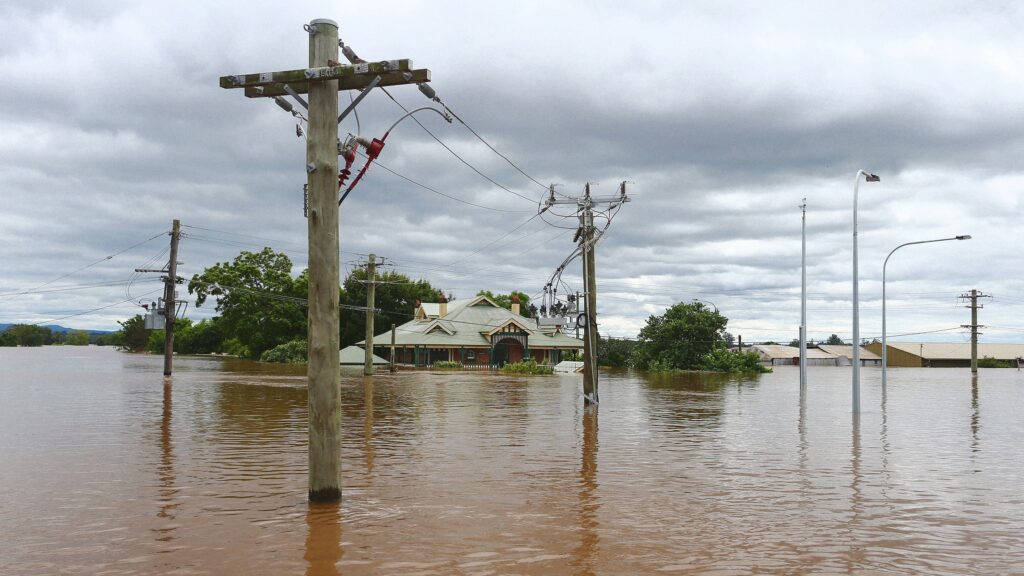
Heavy rainfall from tropical waves 8 and 9 has caused serious flooding and landslides throughout Venezuela. The Andean states of Mérida, Trujillo, and Táchira were among the hardest hit. Storms and floods have an impact on the country’s power transmission and distribution systems. This exacerbates a power crisis in a country that already has structural vulnerabilities in its energy infrastructure. Strong winds and lightning during storms can snap conductors, topple towers, and destroy insulators. Floodwaters can erode the foundations of pylons and poles, causing structural instability and collapse. For example, landslides in the Andes and central-western regions isolate transmission routes, cutting off significant areas from the national grid. Floods also pose severe risks to the electrical substations and distribution networks that deliver electricity to homes and businesses. Using plate rod anchors helps stabilize structures, including power grids, transmission towers, and flood barriers, during storms and floods.
Earth anchors are embedded deep in the ground and connected to structures by cables and rods. The anchors can withstand uplift forces caused by strong winds as well as lateral forces caused by floodwaters or erosion. Strong winds can destabilize power transmission towers or poles. The plate rod anchor acts as a counterweight, preventing them from being uprooted. The anchor holds the structure together by transferring loads to deeper soil layers. Floods can sweep away loose soil, weakening the basis of grid infrastructure. Plate rod anchors extend deep enough to keep the grid in place even when the surface soil erodes. Plate anchors can be used in some flood defense systems to secure sandbags, barriers, or geotextile tubes and prevent them from shifting under underwater pressure.
High-quality plate rod anchors for electricity infrastructure stability
These anchors help to stabilize Venezuela’s electrical grid during storms and floods. An anchor is consists of a steel rod with a connected plate or helix that is buried below. When stress is applied, the plate prevents movement by pressing on the surrounding dirt. Plate rod anchors have applications in power transmission towers, utility poles, flood walls, and retaining walls. Rod anchors improve essential infrastructure resilience by resisting uplift and sliding. This is critical for ensuring stability during storms and floods. Here are the roles of plate rod anchors in power infrastructure stability.
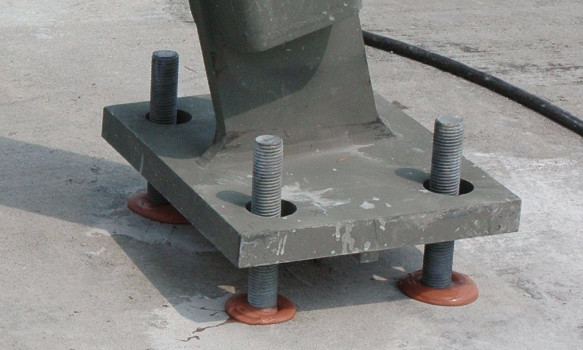
- Structural stability—plate rod anchors embed deep into the ground and connect to utility poles, flood walls, or retaining systems through cables or rods. They are able to resist uplift forces from high winds and lateral forces from floodwaters or soil erosion. Plate rod anchors distribute the load, provide deep anchorage in unstable soils, and prevent foundation failure.
- Preventing tilting—strong winds can destabilize power transmission towers or poles. The anchors hold the structure in place by transferring loads to deeper and stable soil layers.
- Reducing soil erosion impacts—floods can wash away loose soils, weakening the foundation of grid infrastructure. The anchors extend deep enough to maintain grip even if the surface is eroded. The anchors remain anchored into subsoil layers and provide long-term anchorage in areas prone to flooding.
- Support during emergency grid recovery—rapid restoration of power lines is crucial after floods. Using plate rod anchors allows for quick installation using minimal machinery, enables temporary or permanent stabilization of emergency poles, and reduces downtime by securing rebuilt lines.
- Lower maintenance—plate rod anchors are from galvanized steel to resist corrosion and ensure a long service life.
The impact of floods and storms on Venezuela’s power infrastructure
Storms and floods pose serious hazards to Venezuela’s power transmission and distribution systems. These occurrences can cause widespread blackouts, physical damage, and lengthy recovery times in areas with antiquated or poorly maintained grid components. To reduce these effects, Venezuela requires flood-resistant substation architecture, improved anchorage systems, decentralized energy networks, and early warning systems. These impacts include:
- Power outages—floods and storms result in transmission lines collapsing, flooded substations, and short-circuited transformers, causing cascading failures.
- Structural damage to grid infrastructure—these weather events compromise components of the poles such as power poles, guy wires, and substations.
- Increased grid instability—frequent exposure to weather extremes weakens the reliability of the power grid.
- Delayed maintenance and emergency response—floods worsen existing logical and operational weaknesses. This results in blocked roads, limited spare parts and fuel shortages, and understaffed repair crews.
- Socioeconomic impacts—power disruptions from storms and floods ripple into daily life and economic activity. This impacts hospitals and clinics, businesses, and households.