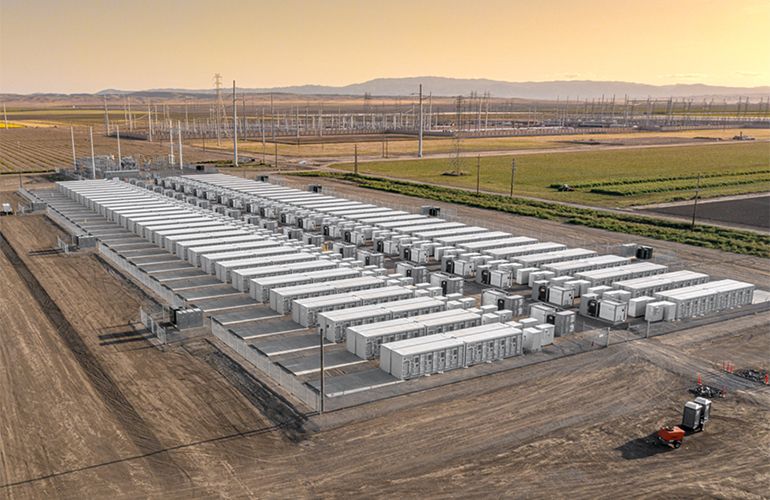
Argentina’s next phase of renewable deployment is contingent on infrastructure sequencing and bankability mechanics. The proposed AMBA transmission project combines grid expansion, storage integration, and risk allocation. This change will also have an impact on how capital is allocated in generating and BESS assets. The transmission project will include 220kV and 500kV lines, as well as a transformer substation capable of absorbing 40% of Argentina’s electrical demand. The expansion of this infrastructure, paired with BESS systems, will allow for enhanced transfer capacity, improved voltage stability, and less congestion-induced curtailment. The project’s integration with renewable energy and BESS systems will help to solve intermittency and curtailment. The entire impact of this breakthrough is dependent on the concurrent deployment of BESS for flexibility, as well as strong financial and regulatory frameworks to reduce investment risk. These interconnections also depend on robust components such as shackle insulators for protection and reliability.
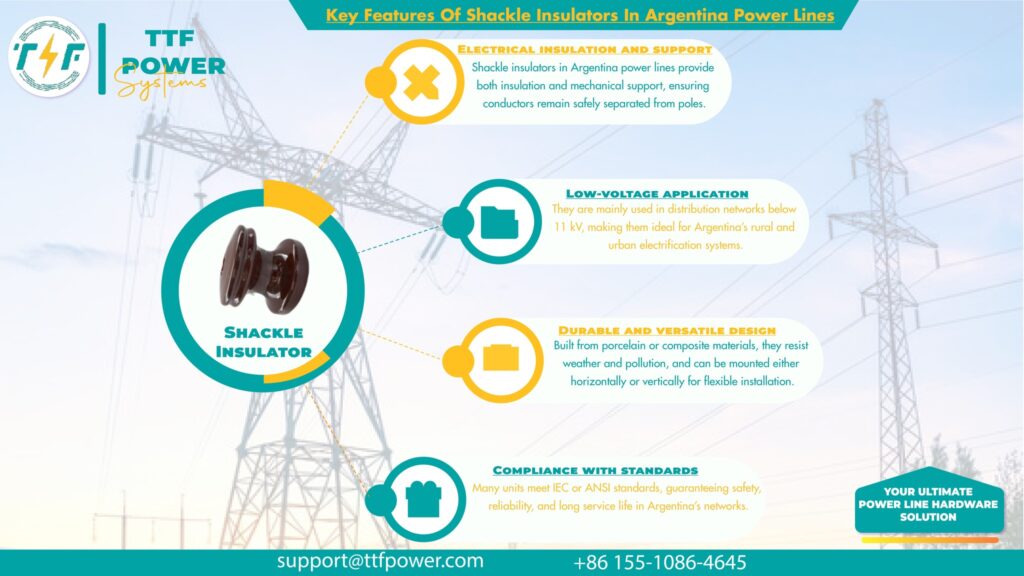
Electrical insulators offer mechanical strength to anchor electrical lines and electrical insulation to keep live wires separate from grounded support structures. Insulators enable technologies for low- and medium-voltage distribution networks, which connect projects to the grid. Shackle insulators insulate live wire connection points, preventing current leakage into the pole. This prevents short circuits and ground faults, which improves system safety and efficiency. Insulators anchor and support conductors at dead ends, sharp corners, and tension points. They handle tensile strains caused by conductor weight, wind, and temperature variations to prevent sagging. These insulators provide a secure and insulated terminal point where the battery storage system connects to the grid. Quality assurance assures that the insulators can endure environmental and operational challenges in the energy infrastructure.
Quality assurance of shackle insulators used in energy integration infrastructure
The quality assurance of insulators focuses on dielectric integrity, mechanical strength, and environmental endurance. Shackle insulators serve at dead ends, angles, and service drops in wind and solar facilities, BESS auxiliaries, microgrids, and sub-transmission tie-ins. Quality assurance prevents failures like as flashovers and mechanical breakdowns. Shackle insulators consists of porcelain or polymer and are verified for body composition, glaze quality, and water absorption.
Dimensional and creepage control, mechanical performance testing, electrical performance, glaze integrity, and validation for environmental and aging are all part of the quality assurance process. It then goes through in-process control and final inspection to ensure dimensional uniformity and defect rates are within tolerance. Quality assurance prevents failures such as surface tracking, cracking, corrosion, high leakage current, and polymer degradation. Such failures can lead to feeder trips affecting inverters and protection misoperations due to transient faults.
The functions of shackle insulators in the energy integration infrastructure in Argentina
High-quality insulators provide specialized load-point functions at the grid’s low and medium voltage edges. They allow for dependable termination, isolation, and mechanical anchoring at interface nodes. They serve in utility-scale renewables, distributed generation, and BESS connected to existing distribution networks. Here are the primary uses of shackle insulators in energy integration infrastructure.
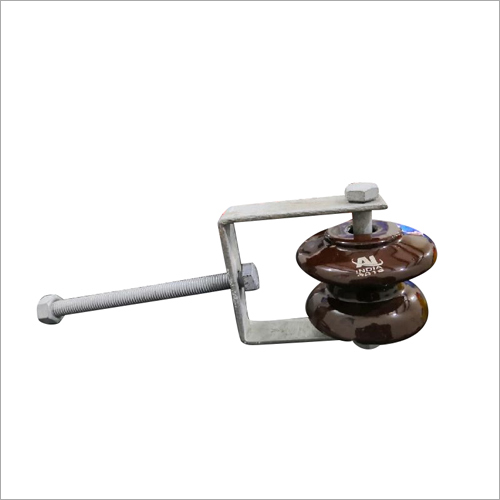
- Electrical isolation at distribution interfaces—shackle insulators provide dielectric separation between energized conductors and grounded supports.
- Mechanical anchoring at dead-ends and angle points – shackle insulators carry tension loads at line terminations, support conductors at direction changes, and stabilize short spans in compact distribution layouts.
- Enabling distributed energy integration – the insulators provide simple and robust termination hardware for new feeder connections. They also allow rapid expansion of modification of distribution lines.
- Reliability in auxiliary power systems—the insulators support AC auxiliary feeders and maintain isolation in yard-level circuits.
- Interface with other line hardware – shackle insulators work with stay wires, anchoring systems, binding wires, or cross-arms and pole hardware. They ensure that electrical isolation is preserved even when mechanical loads are redistributed.
Challenges impeding AMBA and AlmaSADI project development in Argentina’s energy industry
The AMBA transmission extension and the AlmaSADI plan are crucial to Argentina’s efforts to alleviate grid congestion. The development of these projects faces technical, financial, regulatory, and execution problems inherent in Argentina’s energy sector. These challenges are as mentioned below.
- Financial constraints—Argentina’s macroeconomic volatility affects infrastructure financing through high inflation, currency depreciation, and limited access to debt raises.
- Regulatory and institutional fragmentation – transmission expansion involves overlapping institutions that lead to delays in approvals and conflicting planning priorities.
- Technical and grid integration challenges—this includes severe congestion in AMBA, system strength limitations, and aging infrastructure integration.
- Coordination with renewable and BESS expansion—this is the timing mismatch between renewable projects, transmission expansions, and BESS deployment.