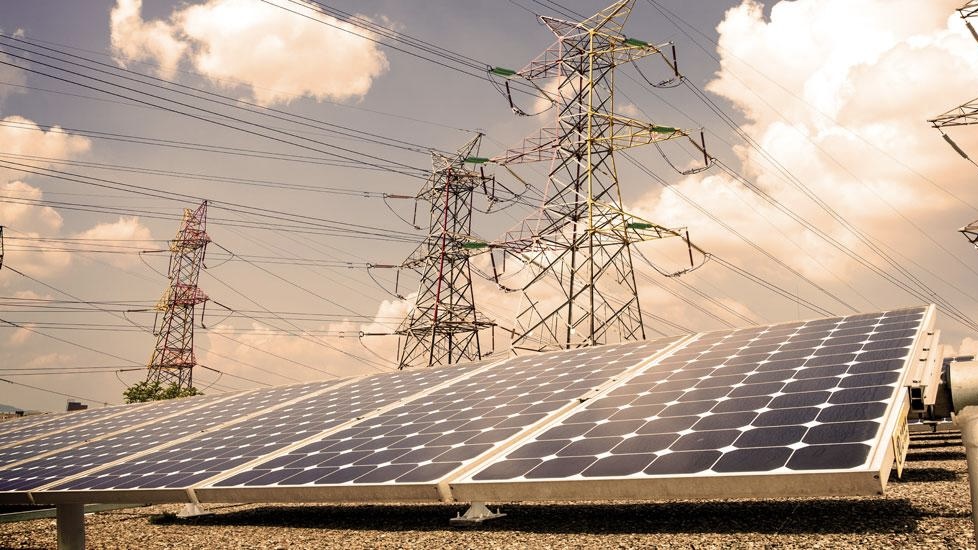
Along with new storage and transmission developments, Argentina’s roughly 19% renewable energy is now competing with natural gas. The new energy paradigm combines increasing gas production with solar PV and wind power. A more resilient and competitive energy market is made possible by this combination. Argentina is now positioned as a global supplier of shale gas because to the development of Vaca Muerta. Through complementary renewable energy sources and combined-cycle gas turbines, gas stabilizes the grid. It accomplishes this by bridging supply gaps during times of low output. Resolving transmission restrictions, aligning market incentives, and implementing flexibility solutions that enable several technologies to coexist within a competitive environment are critical to the transition’s speed and success. These new connections depend on robust infrastructure such as strain clamps. Strain clamps stabilize and expand Argentina’s energy grid to integrate renewable sources.
Quality clamps control mechanical stresses, secure conductors on overhead power lines, and guarantee dependable power transfer over a variety of terrain. Conductors are held in place by strain clamps, which also stop them from slipping in high winds. To guarantee effective power transfer, the clamps are also made to produce a low-resistance electrical channel. Additionally, the clamps connect conductors without losing energy, which is essential when sending power from a solar farm to a substation. As Argentina extends its infrastructure into isolated regions to link new wind or solar plants, strain clamps are essential parts. Long transmission lines that transport clean energy from far-off generation locations to urban areas are stabilized by them. This makes it possible for Argentina to deliver power effectively. Certain clamps incorporate sensors for predictive maintenance and real-time monitoring.
Quality control for strain clamps utilized in Argentina’s renewable energy infrastructure
Strain clamp quality assurance guarantees durability, electrical dependability, and mechanical integrity under changing working conditions. For solar and wind projects to increase system dependability, clamp quality assurance is essential. Argentina’s strain clamp quality assurance complies with international standards because of worldwide supply chains and investor demands. These standards provide specifications for coating and material composition, mechanical strength thresholds, and performance verification testing procedures.
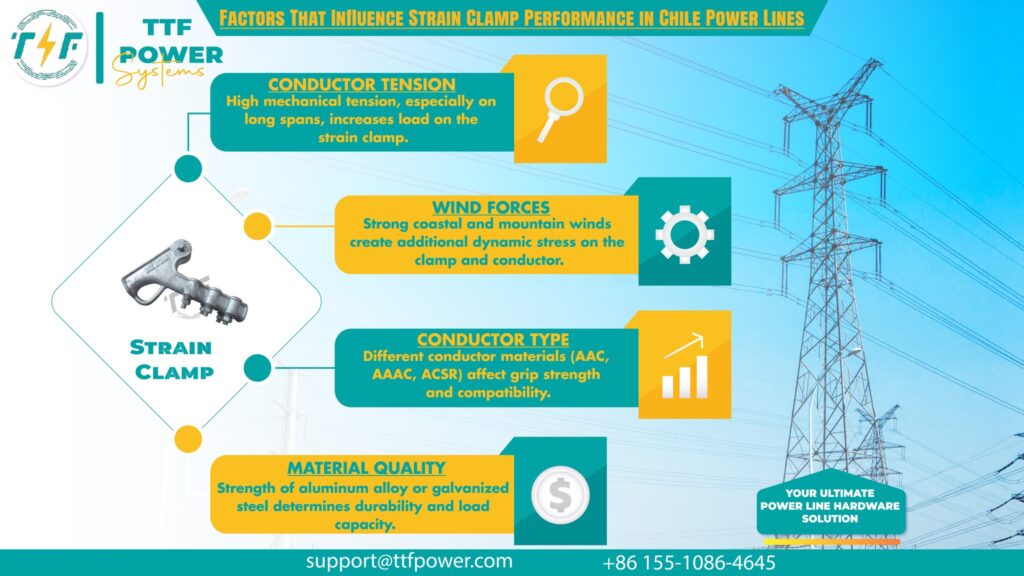
To enable safe tension and sag design, for example, stress-strain testing verifies how conductors and associated devices behave under load. Additionally, corrosion resistance validation, coating thickness and adhesion testing, and metallurgical composition verification are all part of the assurance process. Strain clamps also undergo mechanical performance testing, design and manufacturing controls, durability testing, and field quality assurance.
The functions of strain clamps in Argentina’s infrastructure for renewable energy
In transmission and distribution systems, strain clamps serve as load-bearing, termination, and stabilizing elements. Under unpredictable and harsh operating conditions, the clamps preserve conductor integrity. These are the main functions of strain clamps in the infrastructure of renewable energy.
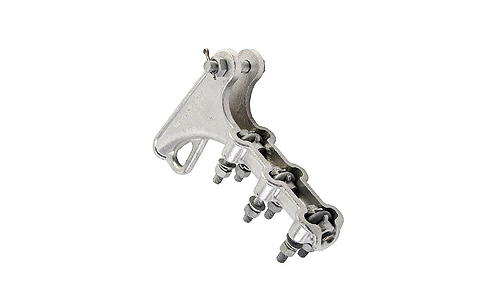
- Mechanical load transfer and conductor anchorage – the strain clamp anchors the conductor at termination points while transferring tensile forces to the support structure. They hold the conductor under tension, prevent conductor movement, and ensure equilibrium across spans.
- Tension management and line stability—the clamps regulate and maintain consistent conductor tension. This is essential to control sag within design limits, prevent movement, and maintain safe ground clearance and phase spacing.
- Electrical continuity and contact integrity—strain clamps contribute to electrical performance. They maintain reliable electrical contact between the conductor and the fitting and reduce contact resistance. This helps prevent hot spots, energy losses, and failure under high-load conditions.
- Vibration and fatigue mitigation—strain clamps help dampen micro-movements at termination points, reduce stress concentration on conductor strands, and limit damage over time.
Argentina’s competitive marketplaces are supported by renewable energy
In Argentina, renewable energy decreases entry barriers, changes pricing dynamics, and increases competition among generation technologies. It affects system-wide economic implications, market access procedures, and cost structures. Important effects consist of:
- Price competition—wind and solar projects drive down power purchase prices, which create downward pressure and reduced reliance on subsidized thermal generation.
- Increased market entry—renewables lower structural barriers to entry compared to large-scale thermal or hydro projects. Modular project design enables incremental investment, shorter construction timelines, and standardized technologies.
- Pressure on natural gas and thermal generation—the expansion of renewables introduces a competitive tension with gas-fired generation.
- Reduction of energy import dependence – renewable expansion reduces exposure to volatile international fuel prices, stabilizes domestic electricity pricing, and improve trade balance.