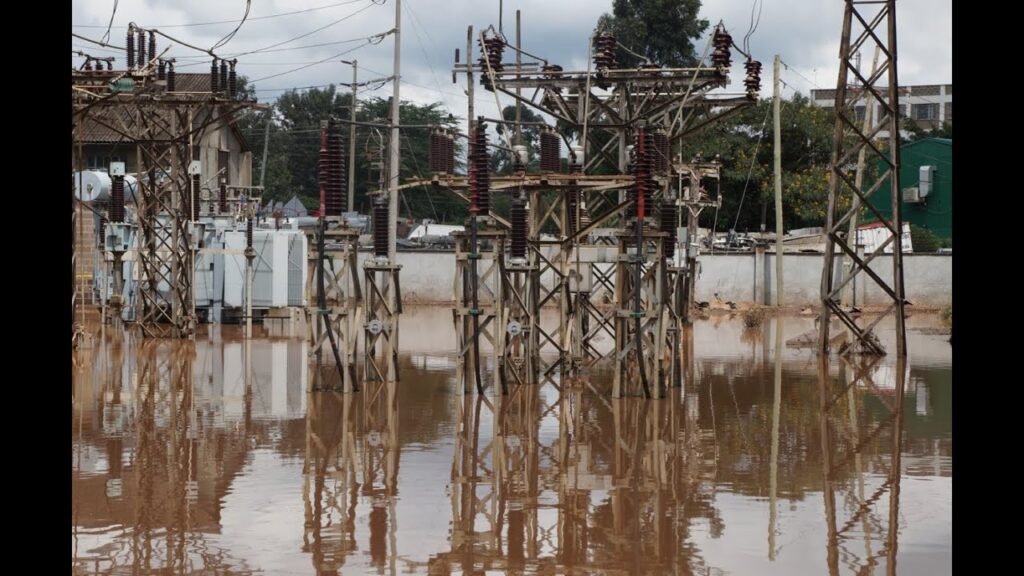
The recent rains have resulted in flooding, posing operational and structural dangers to Peru’s electrical system. The rains cause landslides and infrastructural damage, perhaps disrupting electrical delivery. These conditions produce power outages as a result of short circuits in submerged electrical components, automated protection system tripping, and transmission or distribution line damage. Electrical companies frequently turn off sections of the grid to prevent equipment damage and safeguard public safety. Flooding and severe rainfall raise the risk of erosion and landslides. As a result, distribution poles collapse and transmission towers suffer damage. Flooding also damages control panels and monitoring equipment, contaminates transfer insulating oil, and causes switchgear and protection system failures. Utilities implemented initiatives to remedy these problems and improve grid and infrastructure reliability. This includes the use of high-quality suspension insulators.
Electrical insulators safeguard electrical equipment from floods and strong rains. Their design and material features contribute to better insulation and fewer power interruptions. Floodwaters can allow electricity to leap from the conductor to the grounded tower, resulting in a flashover. Suspension insulators feature a disc form that allows rainfall to drain off the upper surfaces. They prevent the creation of a water film capable of conducting electricity. Their shape also promotes creepage distance, which improves performance in wet circumstances. Suspension insulators are intended to withstand tensile loads from the conductor. Polymer insulators are lightweight, reducing the pressure on transmission towers during severe weather. Suspension insulators provide a dry and insulating barrier, preventing short circuits during floods.
Quality assurance for suspension insulators used in the electrical infrastructure
Conducting quality assurance on suspension insulators helps to preserve transmission dependability and prevent electrical breakdown. Insulators sustain conductors while isolating them from towers and poles. Suspension insulators must be tested and verified for quality before being deployed in Peru’s different conditions. To follow electrical and mechanical requirements, suspension insulators must adhere to relevant standards. This contributes to reliable operation in high-voltage transmission systems.
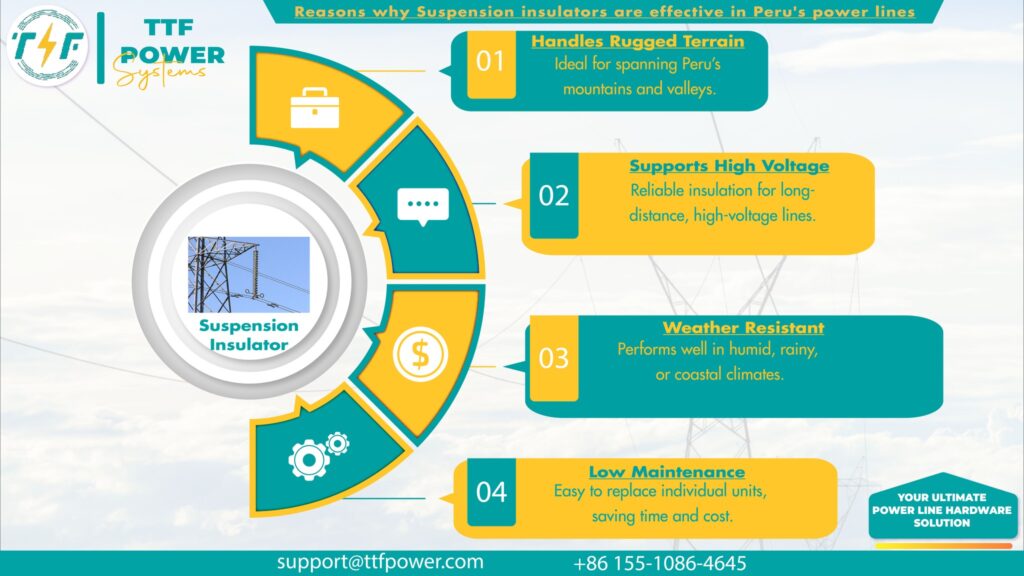
The quality assurance procedure consists of raw material verification, mechanical strength testing, electrical performance testing, and weather resistance testing. This ensures that the insulator can tolerate high voltages, mechanical stresses, and extreme environmental conditions. Utilities and suppliers help ensure the reliability, safety, and long-term performance of Peru’s transmission and distribution networks.
Suspension insulators protecting electrical infrastructure during Peru’s floods
Suspension insulators keep overhead conductors safe while insulating them from grounded buildings. Insulators guarantee electrical safety, prevent failures, and ensure the stability of power infrastructure. They ensure that Peru’s electrical grid is reliable and safe during extreme weather occurrences. Here’s how suspension insulators protect Peru’s electrical system.
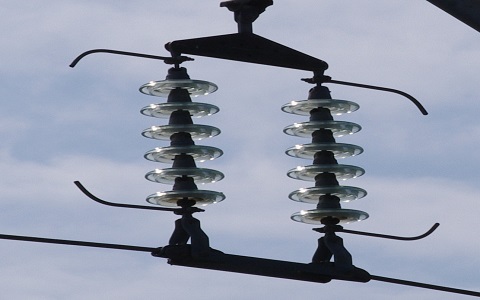
- Electrical isolation of conductors from grounded structures—suspension insulators provide dielectric separation between energized conductors and grounded poles.
- Maintaining creepage distance in wet conditions—the insulators are designed with sheds that increase creepage distance. Suspension insulators reduce the likelihood of surface tracking and flashovers that could disrupt transmission lines.
- Supporting conductors—the insulators protect the infrastructure by supporting the mechanical weight and tension of conductors. They also allow limited movement of the conductor during displacement.
- Preventing flashovers during high humidity—the insulators provide long insulation paths that reduce voltage gradients and maintain dielectric strength in wet environments.
Measures taken to protect Peru’s electrical infrastructure during floods
Flooding can cause damage to transmission and distribution networks, substations, and key equipment. This leads to protracted outages and economic losses. Utility and government organizations have implemented structural, operational, and planning initiatives. These measures aim to improve grid resilience. These measures include the following:
- Elevation and flood-proofing of substations—these include elevated equipment platforms, flood walls and perimeter barriers, and sealed control buildings.
- Improved drainage and water management—utilities put in place perimeter drainage channels, sump pumps and drainage pits. This reduces the risk of soil erosion and water pooling that can destabilize electrical structures.
- Reinforcement of transmission and distribution structures—protection measures include reinforced foundations for poles and towers, anchoring with guy wires, and use of corrosion-resistant materials.
- Integration of surge protection and insulation measures – utilities can adopt installation of line surge arresters to protect transformers and substations from lightning. They can also use high-quality suspension insulators to maintain dielectric performance in wet conditions.