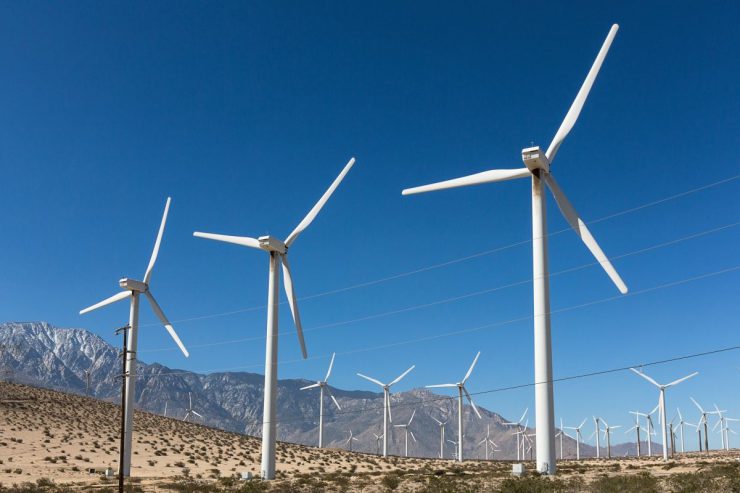
Vestas is growing its presence in Argentina, with 3GW of wind energy already operating and 350MW under construction. The quality of wind resources allows for higher levels of efficiency when compared to other markets. The deployed wind turbines have 162-meter rotors with power outputs ranging from 6MW to 6.5MW, allowing for better wind capture and electricity generation. Growth is also seen in ongoing projects such as the Olavarria wind farm, which will expand installed capacity by 186MW by deploying 29 EnVentus V162 turbines, each rated at 6.4MW. Simultaneously, the expansion of the Mataco wind farm will add 31MW, bringing the total capacity to 270.4 MW. The increase in energy production in Argentina allows for better load distribution and dispatch efficiency, reduced levelized energy costs, and enhanced bargaining power with suppliers and authorities. The project will need the use of sturdy power line equipment like pole bands.
Pole bands are structural mounting hardware for utility poles and aerodynamic components found in wind turbine turbines. The bands secure cables, equipment, and hardware to utility poles without destroying them. Pole bands are heavy-duty metal straps that fit around wooden, concrete, or steel poles. They provide secure mounting places for other hardware. This design prevents drilling holes in the pole, which could weaken it or cause structural failure. They act as the principal anchor for dead-end assemblies. Pole bands absorb massive tensile pressures caused by the weight and pull of hung wires. They help to securely transfer mechanical stresses from the wire to the pole and grounding system.
Quality control for pole bands used in wind farm infrastructure
Quality assurance for pole bands in wind farm infrastructure helps to prevent many failures. Their failure affects cable routing, grounding systems, and auxiliary equipment mounted on poles and towers. Quality assurance includes material selection, manufacture, testing, and field validation. The process comprises material quality control via certification, corrosion resistance assessment, and traceability.
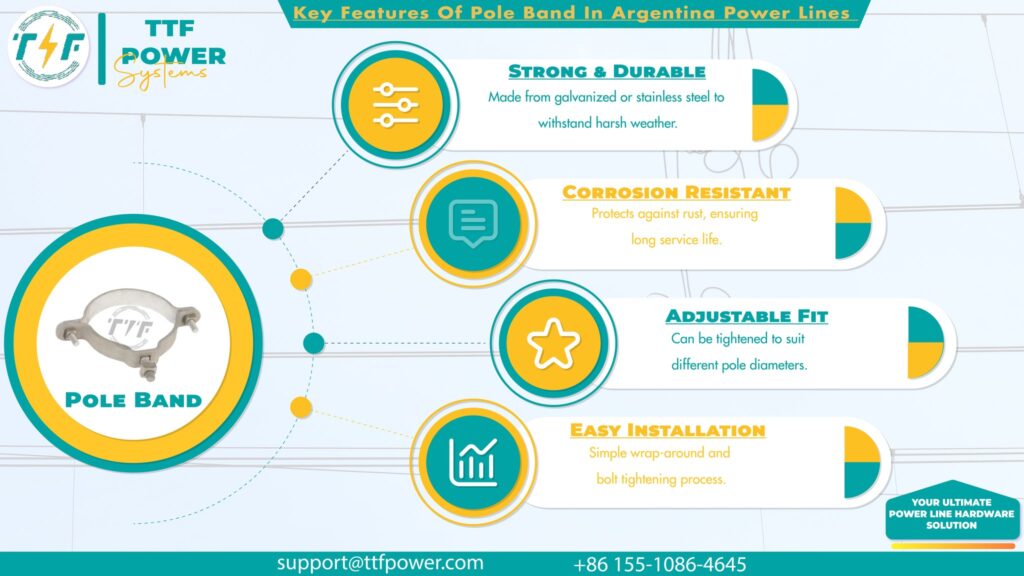
It also entails dimensional and design verification, manufacturing process control, and mechanical and performance testing. Quality assurance includes pre-installation inspection, torque verification, and alignment checks. It also ensures the pole bands align with ISO, ASTM, and IEC guidelines for wind energy infrastructure. The process ensures long-term reliability, reduces maintenance costs, and prevents structural or electrical failures in wind energy systems.
The role of pole bands in Argentina’s wind farm infrastructure
Pole bands are key components of wind farm infrastructure in Argentina. The bands support electrical systems, allow for secure wire routing, and incorporate grounding and protective components. Pole bands are essential for Argentina’s harsh environmental conditions and large-scale project layouts. This makes them critical to operational stability and asset performance. Here are the most prevalent roles for pole bands in Argentina’s wind farms.
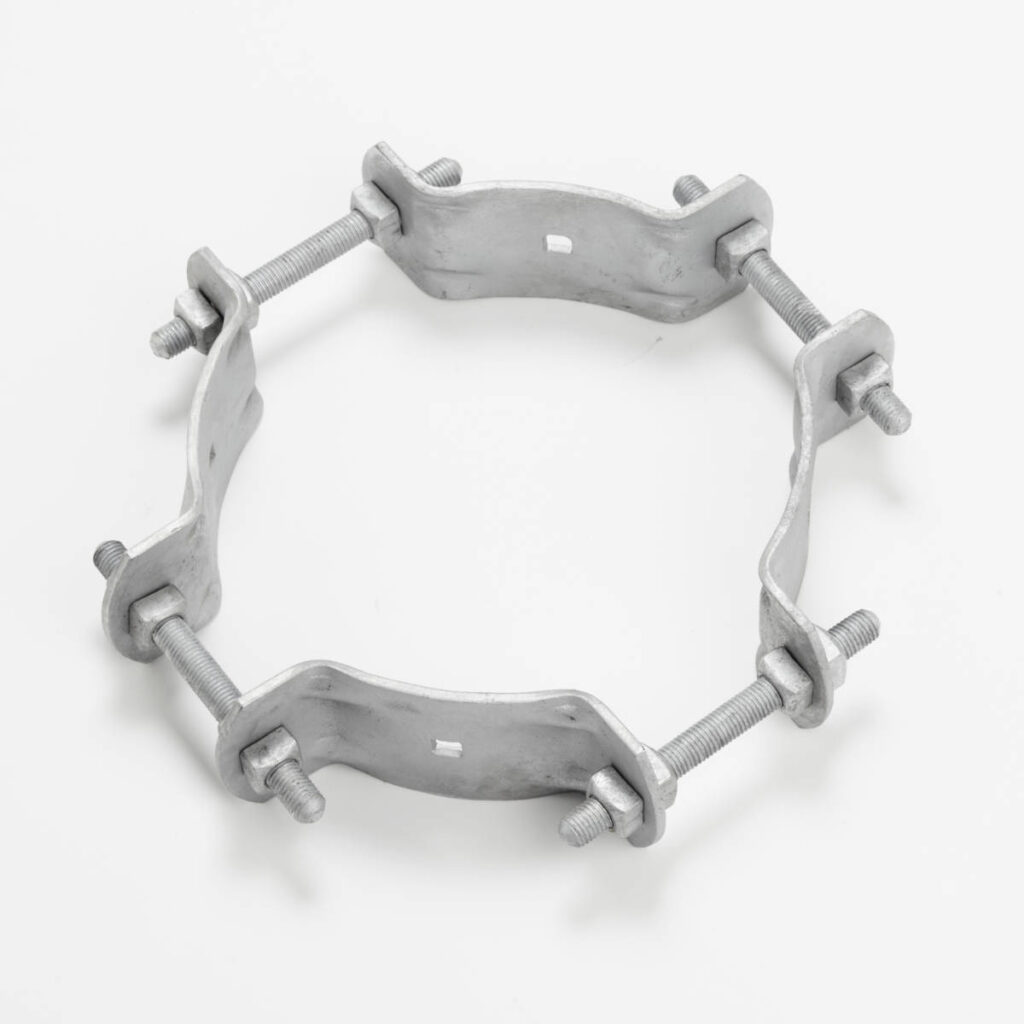
- Structural mounting and load distribution – pole bands secure auxiliary hardware to poles and monopoles. They distribute mechanical loads around the pole circumference.
- Cable management and routing—the bands support cable brackets and cleats, maintain proper cable spacing and alignment, and prevent mechanical strain on conductors.
- Support for electrical accessories—pole bands act as anchoring interfaces for insulators, surge arresters, and earthing components. They ensure electrical components remain positioned.
- Grounding and lightning protection integration—pole bands attach grounding conductors to poles, support downlead clamps, and maintain electrical paths.
- Adaptability to pole types and terrain—pole bands provide a non-invasive fastening method. They reduce the need for drilling or welding on-site.
Technologies that support Vesta’s wind energy expansion in Argentina
Vestas’ wind energy progress is based on a combination of turbine design, digital upgrade, grid alteration, and lifetime support technologies. These technologies consist of:
- Cutting-edge turbine platforms – this encompasses high-performance turbine systems like the EnVentus platform and previous versions.
- Intelligent data and digital enhancement systems – this encompasses SCADA-based observation systems, predictive analytics, AI-powered diagnostics, and tools for modeling and forecasting wind resources.
- Active output management systems – this technology enhances performance, modifies turbine operations to increase output, and aligns maintenance planning with production goals.
- Grid integration and power electronics—Vestas technologies provides comprehensive converter systems, voltage support, and reactive power features, along with hybrid compatibility.
- Modular and site-adaptive engineering – Vestas guarantees that turbines can be tailored for various wind classes, blade designs and tower heights are optimized for each location, and logistics and transportation solutions are customized to fit Argentina’s infrastructure limitations.