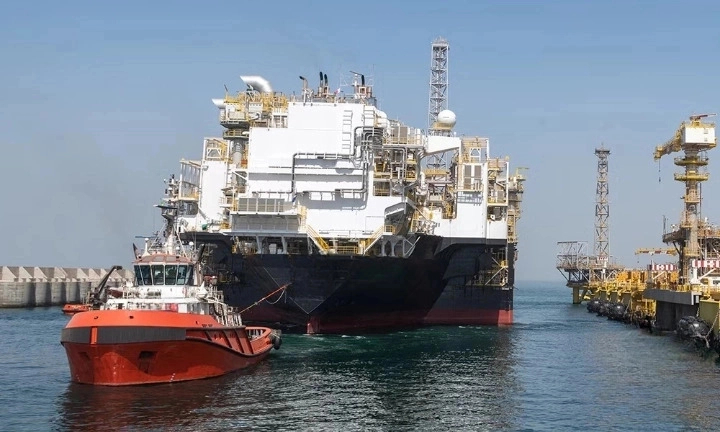
Argentina is building its first floating liquefied natural gas factory, powered by gas from the Vaca Muerta shale seam. National Oilwell Varco (NOV) provides the submerged swivel and yoke (SSY) system. This technique enables the FLNG to securely rotate with the wind and currents while delivering gas via subsea pipelines. It also lowers the requirement for huge fixed jetties and onshore LNG plants. This concept incorporates a variety of technologies, including subsea pipeline tie-in, mooring durability, and digital monitoring. FLNG and SSY infrastructure provide a direct channel for monetizing gas reserves in global markets. This opens up work prospects in engineering, logistics, shipping, and offshore services. Supporting such areas lowers Argentina’s trade imbalance and invites foreign direct investment. FLNG production also helps improve energy security for importing countries. B-strand connectors connect the high-strength spiral strand mooring line to the chain on the seabed or directly to the turret.
The strand maintains the integrity of the entire mooring system in the severe environment off Argentina. B-strand connectors connect the wire rope to other components. The connector terminates the wire rope and transmits the huge tensile force from the rope to the connector body without failure. It reduces stress concentrations at the wire’s end. B-strand connections are built to last and feature a sealed termination that protects the wire end from corrosion. It offers a standardized, sturdy interface for connecting to other mooring components. B-strand connectors are compatible with high-performance spiral strand applications. It guarantees a precisely matched system with a shown fatigue life.
The relevance of B-strand connectors in the FLNG and SSY infrastructure
B-strand connectors are critical to ensure the safety, dependability, and structural integrity of FLNG and SSY infrastructure. The connectors ensure that the FLNG operates continuously, allowing Argentina to export gas efficiently. B-strand connectors reduce the number of offshore interventions while increasing durability and reliability. The link from the connection ensures load bearing stability, flexibility, and electrical and structural continuity. B-strand connectors play the following roles in Argentina’s FLNG and SSY infrastructure.
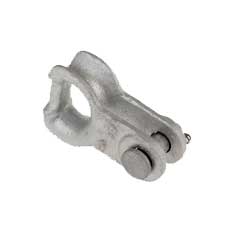
- Structural load transfer in mooring systems—B-strand connectors link individual steel strands that make up the mooring cables. They ensure uniform load transfer across all strands to distribute tension and prevent weak points.
- Flexibility and adaptability in offshore conditions—the B-strand connectors provide flexibility to infrastructure. This allows mooring lines and subsea cables to adjust to vessel movement without overstressing the infrastructure.
- Electrical and signal continuity—the connectors work with subsea power and control cables that support SSY operations. They ensure the continuous transmission of electrical signals and monitoring data.
- Integration with SSY and pipeline systems—B-strand connector ensures secure attachment points for subsea pipelines, swivels, and yokes. It supports the stability of the gas transfer line to maintain both mechanical strength and alignment.
- Corrosion resistance in marine environments—the connectors can withstand saltwater exposure, pressure variations, and subsea chemical interactions. The durability extends the operational lifespan of mooring and subsea systems.
- Safety and redundancy—B-strand connectors create redundant pathways to ensure the connection remains intact. This prevents equipment failure that can lead to production halts or environmental risks.
Opportunities for FLNG Development in Argentina’s Energy sector
Despite the presence of Vaca Muerta’s shale, Argentina’s capacity to commercialize the resource faces infrastructural and export constraints. The development of FLNG technology opens up new opportunities for growth, investment, and global energy integration. Successful FLNG management might propel the country to the forefront of LNG exports. The main opportunities in Argentina include
- Unlocking LNG exports without onshore terminals—FLNG bypasses traditional LNG development by liquefying gas directly offshore. Anchoring to the SSY allows Argentina to track exports.
- Monetizing Vaca Muerta gas at scale—Argentina can export gas directly from pipelines to global LNG carriers.
- Global energy markets—the FLNG exports provide flexibility and mobility to allow exports to reach many regions, depending on demand.
- Supporting energy transition—Argentina can leverage LNG revenues to fund renewable energy projects such as solar and wind. FLNG has a smaller carbon footprint compared to onshore LNG plants.
- Infrastructure flexibility and risk reduction—FLNG is scalable and relocatable to reduce investment risks compared to fixed terminals. Argentina can adapt capacity without locking into massive costs.